

Thank you for lots of great questions. Sam posted his answers earlier in the week - covering topics from whether they’ll be an early election, to why Burnham isn’t talking much about climate change, and whether Reform has “peaked”.
These are my answers. There were a number on China which I have not dealt with here but will try to look at in a separate post.
Topics covered include:
Lots on Russia and Ukraine: the situation on the front line; Russian casualties and mobilisation; the Wildberries attacks; Ukraine’s postwar situation; the challenge of a ceasefire for Ukraine’s allies; Russia’s threat to Europe and much more.
UK military spending: how should it be spent? What’s the right amount? How do we get more bang for our buck?
The Israeli elections and the impact of a Netanyahu loss for peace in the Middle East.
The ongoing shambles in Iran, and the possible outcomes, as well as challenges for the Iranian economy.
What I might have done in an alternative career and which historical figures I’d like to challenge at croquet…
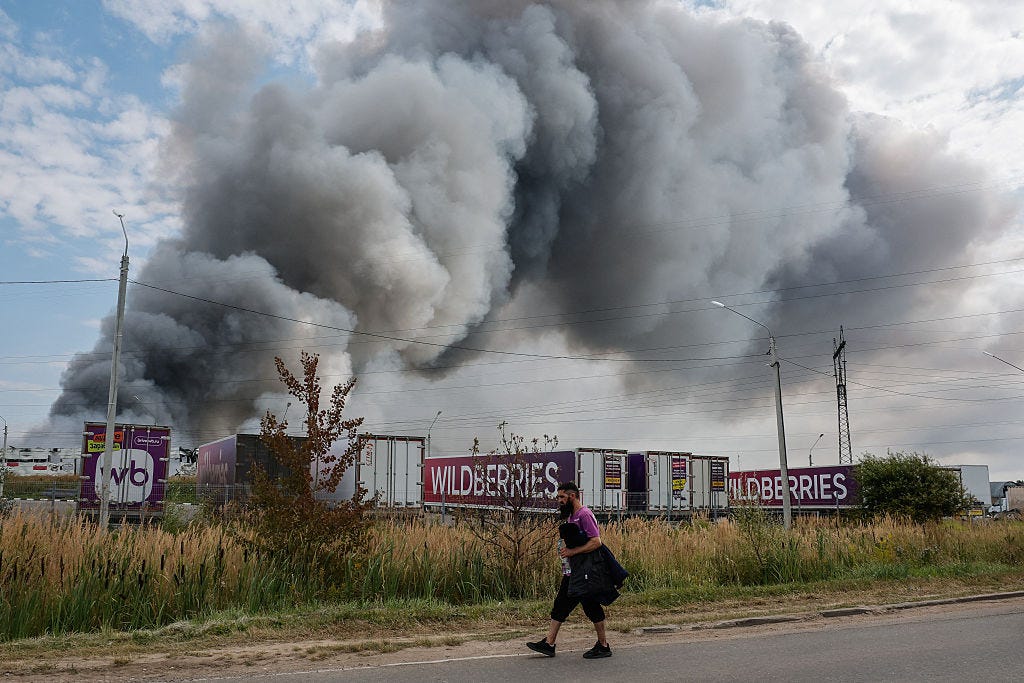
Russian and Ukraine
Jonathan Tapp notes my view that setbacks can accumulate and add to the pressure on Putin without there being a cliff-edge that would force him into an immediate change of course, but then asks what would it take to convince him to shift him from his current approach? Ben raises one possibility of Ukraine replicating the success of its recent counteroffensive in the Oleksandrivka area elsewhere along the front. Against this, James McCoy asks whether Ukraine could be approaching a tipping point where Russian military advantage could start to increase exponentially?
Winston Reigh, noting the extent of Russian casualties, and how many families must have been affected and that this must raise suspicions about the extent of the losses. Staying with the topic of Russian public perceptions, Carol Gamm asks about general support for more mobilisation.
Jurai Kriz notes my difference with Mark Galeotti. Mark (who I take very seriously) seems to suggest that Ukraine’s attacks on Russian infrastructure are a bad idea as they embolden Kremlin hawks.
The issue that prevents serious discussion of a ceasefire is Putin’s determination to acquire all of Donetsk, although it would be naive to assume that if we reached the point where Ukraine was obliged to concede on this matter that this would be the end of all of Putin’s territorial demands.
Putin is pressing for the subjugation of Ukraine and he does not need emboldening to take punitive action. He has been doing it for years. It is hard to blame Ukraine for fighting back or assuming that it requires badly hurting Russia to get Putin interested in a ceasefire (which Ukraine continues to propose).
Many among the Russian elite question whether it is worth continued and growing economic pain along with the heavy casualties to get hold of land that matters far more to ordinary Ukrainians than it does to ordinary Russians. But Putin has shown no sign of bending, apparently fortified by the optimistic stories told to him by the Russian general staff about their advances. He may also be confident that for now however much Ukraine can hurt Russia, Russia can hurt Ukraine more.
Elite criticisms are becoming more regular although not enough to be regime threatening, and the banning of Yabloko, the closest Russia has to a ‘peace party’, from next month’s rigged elections means that there is no way for ordinary Russians to make their feelings known. A serious crisis - a ‘cliff edge’ - would force Putin’s hand but we have yet to reach this point. A widespread perception of imminent crisis might be sufficiently persuasive, if Putin accepted that he would be better off taking the initiative before he is seen to have no choice other than waiting until the situation is desperate.
One can read commentary predicting crises in the oil sector, the wider economy, and at the front. I’m always nervous about doubting Russia’s ability to adapt to challenges, but claims from earlier in the month that the Kremlin was on top of the refined oil problem have been undermined by recent Ukrainian strikes. In a recent post I discussed the regular attacks on Wildberries warehouses, which continue (see picture above), and their implications for the VTB bank, which is already carrying a lot of debt. This is a problem that can be handled by the Central Bank but only by adding to inflation. These are the ways that a cliff edge might be avoided but at the cost of making the longer term problem worse.
The biggest issue is the front line.