
Putin's energy crisis
The growing impact of Ukraine's attacks and whether Russia can adapt

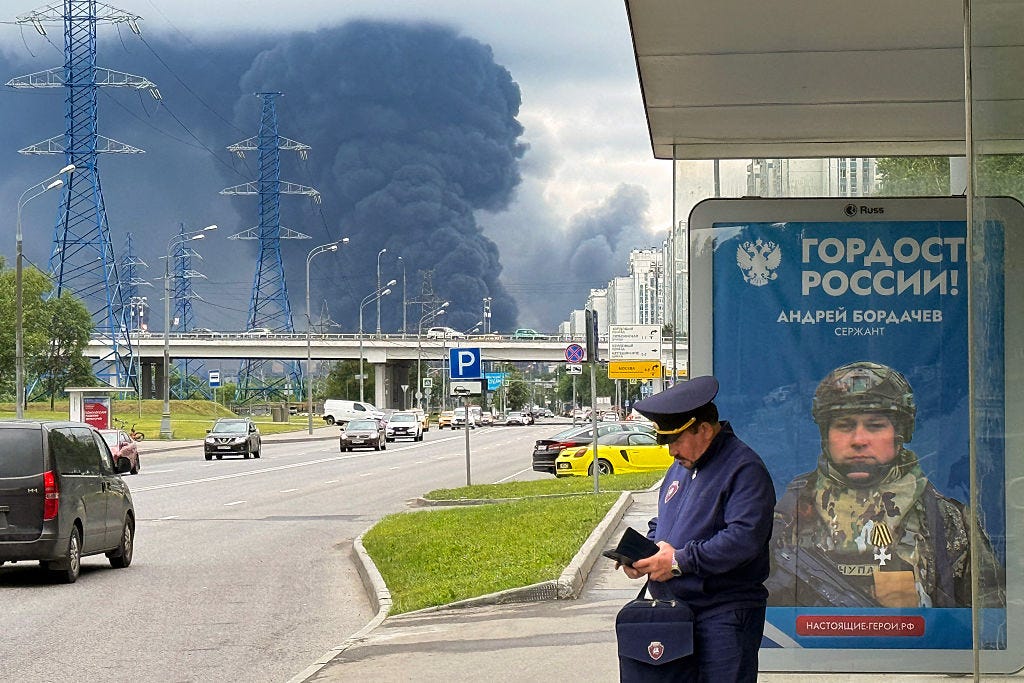
Smoke rises from Gazprom Neft’s oil refinery in Moscow
I have focused on the siege of Crimea in recent posts because the Kremlin seems to have no idea how to deal with the peninsula’s loss of supplies and energy. This remains the case. The position continues to worsen.
In the past week we have seen a further remarkable development with the success of Ukrainian uncrewed systems targeting Russian tankers and cargo ships in the Kerch strait, which links the Sea of Azov and the Black Sea. Since the Black Sea fleet left the area the Russians have been trying to control the passage of ships into the Sea of Azov, allowing them through one at a time after checks. This mean that they had to queue to get through, and it is this queue of tankers and cargo ships, all needed in Crimea with growing urgency, that Ukrainian drones have been targeting on a daily basis.
No new protective measures appeared to have been take as the Ukrainian attacks built up: two tankers hit on 6 July; ten tankers plus one cargo ship and one ferry on 7 July; nine tankers on 8 July: and 14 tankers on 9 July. According to Stefan Korshak of the Kyiv Post, video shows about 80 percent of the vessels hit set on fire, with claims that about half were rendered inoperable and around one quarter burnt out and ruined. In some cases when fires were put out the vessels may have been hit again.
According to Robert “Madyar” Brovdi, commander of Ukraine’s Unmanned Systems Forces, Ukrainian drones hit 21 tankers, four tugboats, two dry cargo vessels, and one specialized vessel, overnight on 11 July. He observed that not only was the ‘shadow tanker fleet … noticeably shrinking,’ but that, apparently, ‘traffic through the Kerch Strait has been stopped.’ Brovdi added that 53 targets in Crimea and southern Russian-occupied territories were also hit, including energy infrastructure, as part of the ongoing ‘Crimean Switch Off’ campaign.
Reuters also reported that shipping companies have been notified that all requests for passage through the Kerch Strait would not be accepted from 6:10 p.m. local time on Friday. This affects Russia’s leading grain-producing regions, Rostov and Krasnodar, which lie along the Sea of Azov through which a quarter of Russia’s agricultural exports pass.
Ukraine has been striking roads, railways and ferries to sustain the siege of Crimea. The aim is not just to make the peninsula ungovernable, and humiliate the Kremlin in the process, but to stop it being used for attacks into Ukraine, including the land operations in Kherson and Zaporizhzhia. That is why the port of Sevastopol continues to be struck, although what was left of the Black Sea fleet scampered away to safety some time ago, and could provide no protection to the tankers recently attacked, along with airfields used for strikes against Ukrainian towns and cities. The Russians are now reduced to smuggling fuel into the annexed territory using any vehicle available, including passenger cars.
I have paid less attention to the developing fuel shortages in the rest of Russia because I assumed that Vladimir Putin was going to find a way to ease the pressure. But he has yet to do so. In the rest of this post I will focus on this challenge, how Ukraine has managed to step up the pressure, the serious problems it is causing, and whether Russia has the capability to adapt.
Keep reading with a 7-day free trial
Subscribe to Comment is Freed to keep reading this post and get 7 days of free access to the full post archives.