
Putin's Crimea Problem
Ukraine's "Logistics Lockdown" is turning his prize asset into a liability

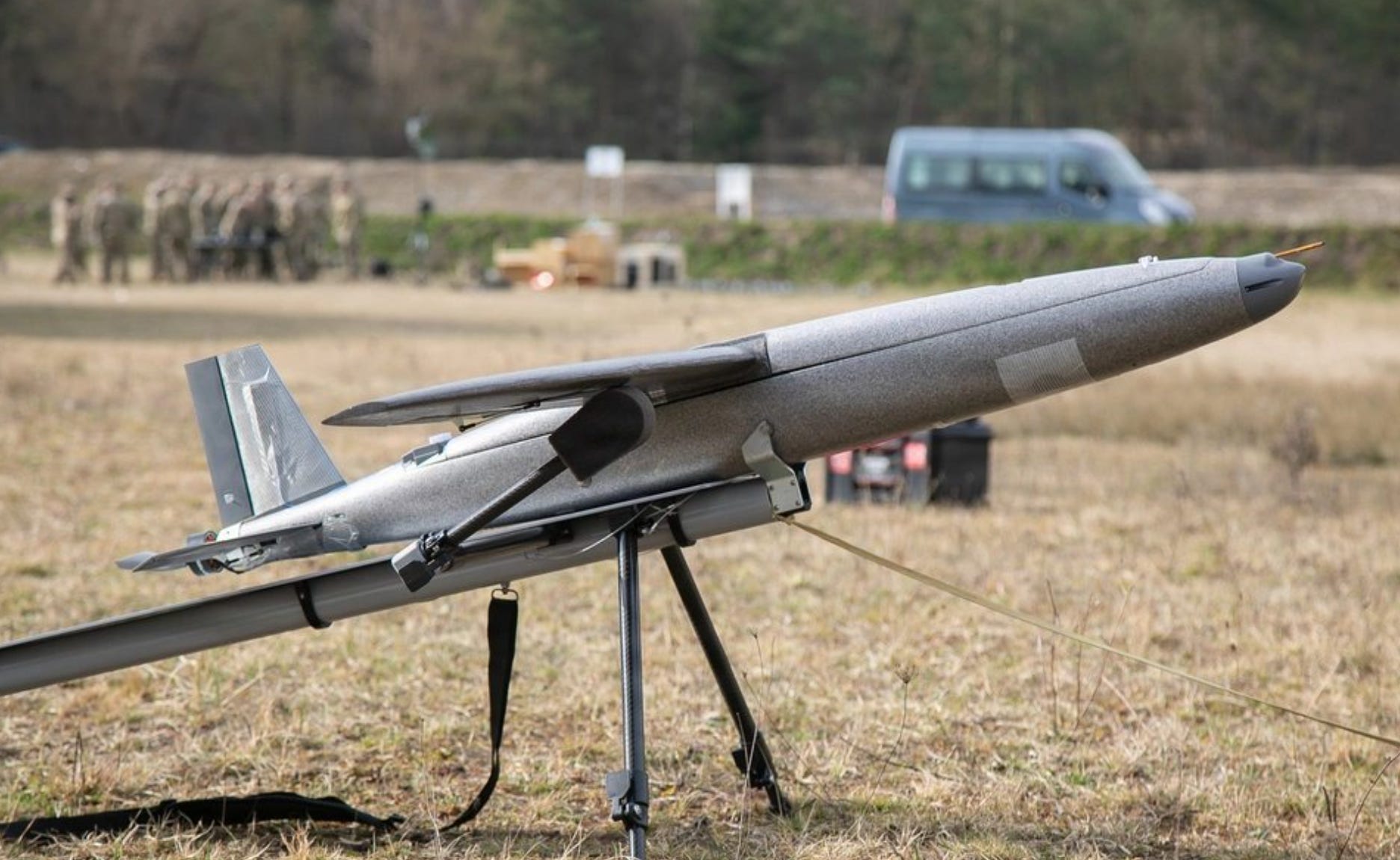
When I wrote in April about how Ukraine had been able to take the lead in the ‘drone race’ I mentioned a new system that had been bothering the Russians because it appeared to be AI-enabled. They called it Martian. Its official name is ‘Hornet’ (pictured above) and it is now making an impact.
Hornet is produced by former Google CEO Eric Schmidt’s Perennial Autonomy company. The aim from the start has been to develop a suite of drones that employs the most advanced technology yet can also be mass produced. Last July Ukraine officially announced cooperation with the company and a plan to produce hundreds of thousands of drones of various types.
The Hornet has a take-off weight of about 15 kg, including a warhead of up to 5kg. It can fly up to 150 kilometres at a cruising speed of between 100-120 km/k though it can go as fast as 200 km/h. It carries cameras, one of which is a course camera, the other is directed downwards which supports visual navigation. This enables it to be independent of satellite navigation. The Ukrainians have also attached miniaturised Starlink terminals so that they can be controlled over the distance and are impervious to Russian electronic warfare. Each costs between $5,000 to $10,000. The Kyiv Post reports Ukrainian drone pilots describing it as ‘easy to fly, resistant to jamming, and reliably able to stop and set afire any vehicle operated by Russia smaller than a tank.’
They began to be tested last year but have only been deployed in numbers since this spring and are already attracting attention. They are quite distinct from the FPV short-range systems that make the front-lines so hazardous or the long-range systems that are now regularly hitting targets well into Russia.
Critics have complained for some time about Ukraine’s deficiencies in medium-range systems. Front-line operators might be adept at taking out individual soldiers and vehicles but it is far better to attack depots, command posts, and supply lines to the enemy’s rear. This is the gap that the Hornet is now filling.
Because direct hits can be scored on trucks and tankers on major roads, they are now being used methodically against some key Russian supply lines, including those into occupied Crimea. At the end of May Defence Minister Fedorov announced this as a new stage in the Ukrainian campaign:
‘We are launching a “logistics lockdown” for the Russian army. We are scaling middle-strike operations to systematically destroy enemy logistics and supply lines, stripping them of their capacity to mount offensive actions. ….. The enemy’s rear is no longer a safe haven. We are seizing the initiative—using technology and the cold math of war to paralyze their operations.’
This campaign takes advantage of recent advances in drone technology but it is also the latest stage in an effort that began not long after the invasion, using whatever long-range systems were available, to attack vital targets behind the front lines as a means of disrupting Russian operations (as described in this excellent report by the Tochnyi group). Mick Ryan has underlined its significance:
‘What began as a covert operational experiment has now been formalised into a declared strategic programme. The mid-range strike campaign represents a maturation of Ukrainian drone doctrine. These are sustained, systematic efforts to degrade the operational capacity of Russian forces along the most important ground supply corridor of the war. The strikes hit at the connective tissue between Russia’s strategic industries and the Russian units on the front line.’
This can be seen in a number of sectors, but in this post I want to concentrate on the threat posed to the Russian position in Crimea. This is not because immediate problems with supply are going to force the Russians to withdraw but as a way of showing just how much has changed in our assumptions and expectations about what this war is about and how it can be fought since the invasion of February 2022.
Keep reading with a 7-day free trial
Subscribe to Comment is Freed to keep reading this post and get 7 days of free access to the full post archives.