
Why Kupyansk Matters
Undermining the Russian narrative

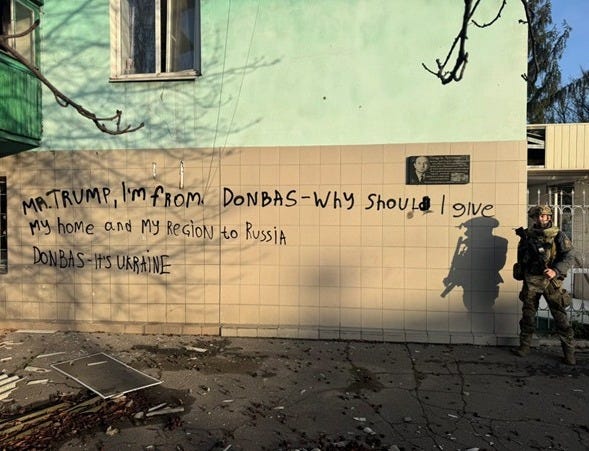
Message from Ukrainian soldier Vitali Ovcharenko on a wall in Dobropillia near Pokrovsk.
In a post last summer I described how Putin’s ‘narrative power’ influenced discussions of the war ‘in ways that encourage fatalism and defeatism in the West.’ The source of the power was the assumption that Russia was bound to win because of its superior numbers, and its apparent willingness to tolerate huge losses in pursuit of its objectives. So long as Russian forces were moving forward, no matter at what pace and at what cost, then a decisive victory surely awaited them. The logic of this narrative was that Ukraine would be wise to accept the inevitable and get the best deal it could now, even if that meant handing over territory that Russia had failed to take by force of arms.
The persistent strength of the narrative can be seen in any number of newspaper articles which routinely refer to the advantages enjoyed by Russia and the gains that have been made. A particular influential one appeared in the New York Times on 6 December. It showed how Russia’s claims about military success were linked to its tough stance in the negotiations:
“In recent weeks, Russian forces have advanced on several fronts. They are on the brink of capturing Pokrovsk, a onetime logistics hub in the eastern region of Donetsk, and have nearly encircled its neighbor, Myrnohrad. They are moving quicker in the southern region of Zaporizhzhia. They are pressing closer to the northeastern city of Kupyansk, and they are making gains around the eastern city of Siversk, according to battlefield maps, analysts and soldiers.”
While acknowledging that at the current rate of progress the Russians were still far from achieving their apparent objectives, and the costs were extremely high, the message was gloomy. A Finnish analyst, Emil Kastehelmi, was quoted: ‘The future looks really, really grim for Ukraine. I don’t see a clear path out.’
This same logic underpins the Trump administration’s current push for a deal. Thus David Ignatius’s report that the Trump team’s view that Ukraine might as well give up the ‘roughly 25 percent of Donetsk it still holds’ as it ‘is likely to lose much of that in battle over the next six months, in any event.’ The value of this narrative to Russia was made explicit by Deputy Foreign Minister Sergei Ryabkov in an interview with ABC News. Whether the war could be stopped, he explained, ‘depends much on how people who support authorities in Kyiv recognize the inevitable outcome of our success.’
Both sides understand the power of this narrative: Russia has been anxious to push it as Ukraine has sought to debunk it. The Kremlin has had the easier task in this, not least because the Russian advantages are taken for granted. Many Ukrainians are clearly anxious about the remorseless Russian offensive, and it seems only small consolation that Russia has been forced to take so many casualties for what remain meagre gains, at least when set against the size of the country. The question of ‘why continue to suffer to defend your land’ gets put to Kyiv more forcefully than ‘why are you accepting such huge losses to take slithers of land which isn’t yours’ is to Moscow.
Kupyansk
A counter to this narrative has occurred at Kupyansk in Kharkiv oblast.
Keep reading with a 7-day free trial
Subscribe to Comment is Freed to keep reading this post and get 7 days of free access to the full post archives.