
I write a lot about the dysfunctions of government, but it is also important to learn the lessons of success. Sometimes the state can work incredibly effectively. The UK’s rapid deployment of covid vaccines often comes up as an example, so who better to explain how it happened than Dame Emily Lawson, who led the rollout? In this interview we discuss what she and others did to deliver the programme, and what the lessons might be for government in normal times. This is the first time she has discussed it in the media. It forms part of a loose trilogy with the post we did on the AI security institute with Henry de Zoete (now its Director) and our discussion with former No 10 foreign policy adviser John Bew on the UK’s involvement in Ukraine.
Emily spent most of her career in the private sector before joining the Executive team of NHS England in 2017. Just before the pandemic she became its Chief Commercial Officer. Between 2021 and 2023 Emily created the new No10 Delivery Unit, responsible for delivery across Government. She is currently Chief Operating Officer at Newton and was awarded a DBE in the 2022 New Year Honours for services to the NHS, particularly for Covid-19.
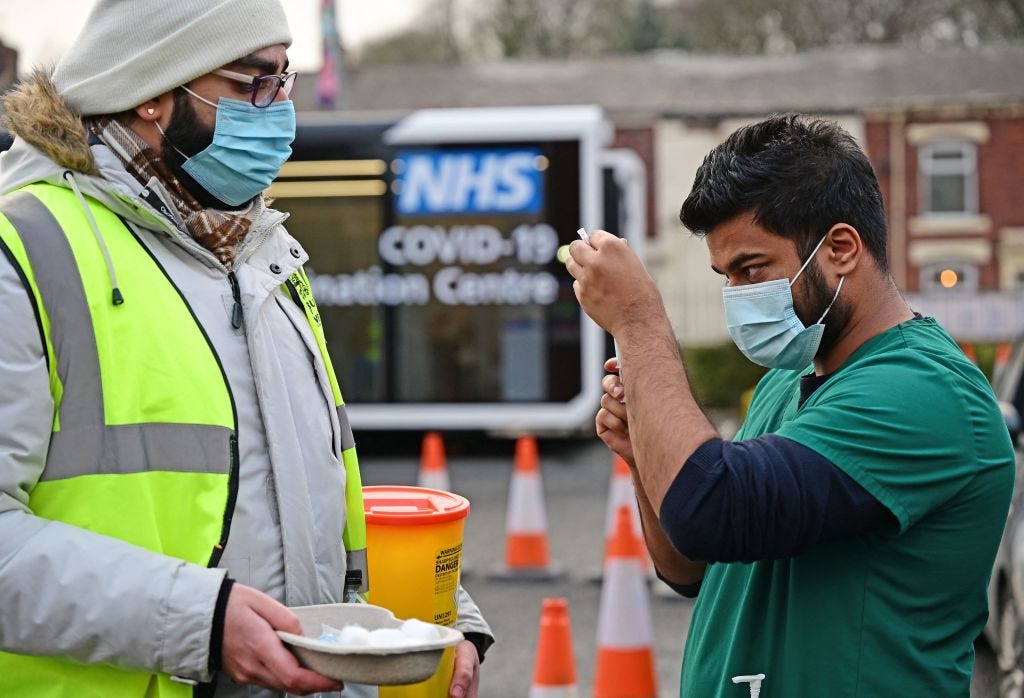
Sam: How did you end up responsible for the vaccine rollout?
Emily: I was in the right place at the right time with the right skill set. I won’t be too British about it. I was the right person to lead it, and it was a good thing I was there. I’d done 15 years at McKinsey, which I’d gone to because I wanted to learn how to run organisations well. Absolutely loved it, the values, the ability to have massive impact, and the personal development was fantastic, but I eventually got bored of not taking responsibility for my own advice, so I left and joined the private sector.
After two further private sector jobs I thought, let’s have a think about what has to be true for me to do my best work, and that made me realize that three things had to be true. One was I needed a big complicated problem to solve, or I got bored. The second is that I needed to feel that in some way I was making the world a better place, and the third thing was that I needed a team, because although I’m a very good problem solver, I’m a pretty good people leader, I’m a good communicator, but sometimes I’m wrong, and you need people who go, “Hang on a minute, I’m pretty sure you’ve completely missed the point on that one”.
During that period, the NHS called, and I thought, “I don’t really want to do public sector”, and they said, “oh no, give it a try”. And then I thought about those three things, and thought, actually, if those are my three things, it’s pretty hard to turn down the NHS. I did two years of basically working to bring the two centres of the NHS together and then became the Chief Commercial Officer.
Then the pandemic happened. During the first few months I worked mostly on the PPE supply chains but by October that system was working well and independently. Soon after it became clear that we were going to get a vaccine, we were going to get it relatively soon, and that the team running vaccine deployment within NHS England was really struggling with the complexity and level of political pressure.
I took part in a red teaming exercise and was really concerned about where everything was. So, I spoke to Simon Stevens [NHS CEO] to say where I thought the issues were. And my reward was about two weeks later, he said “I think you should lead this”. I consulted with my husband and children and as my chief of staff said, you know, you’re obviously going to take this, but I did want to properly think about what I was letting myself in for. Then overnight I got the regular weekly email from Rabbi [Jonathan] Sacks. I didn’t know it at the time but this was the week before he died. Every week his team sent out a thought on the relevant portion of the Torah, which that week was Abraham’s call to leadership. I don’t really believe in signs, but I couldn’t quite get over the timeliness of that message.
Sam: Let’s talk about the process. What was the first set of things you had to do, and to what extent did you have to work around the normal system to make it happen?
Emily: Given how fast we had to work, we had to use what we had where possible. That also gives you the permission to be brave about building something new where demonstrably what you’ve got is not going to work.