
What's the Greens' ceiling?
Can they do to Labour what Reform has done to the Conservatives?

The big story in British politics last year was not the rise of Reform but the Greens. By January 2025, Reform were already leading the polls and well ahead of the Conservatives. Despite reams of positive media coverage, and the government’s very low approval ratings, their support hasn’t shifted much since then.
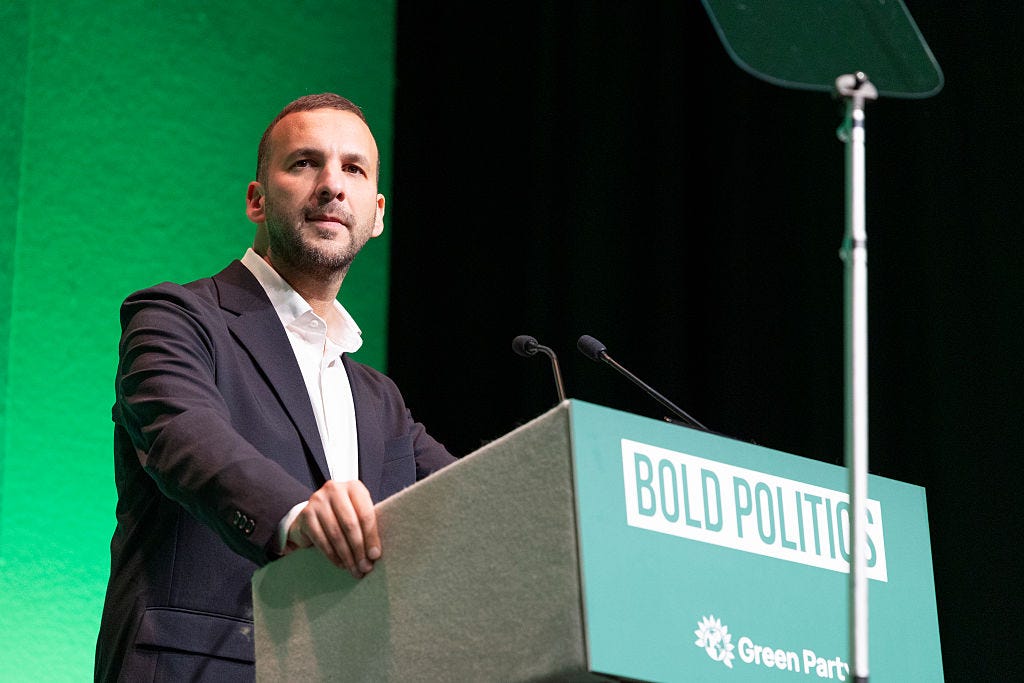
But the Greens started 2025 on just 8%, little more than they had achieved in the general election the previous summer. Over the course of the year that doubled to 16%, with most of the boost coming after Zack Polanski’s election as leader. Their support is now just below Labour’s and in Wales they are polling higher than the government, which means they could well end up as the junior partner in a coalition with Plaid Cymru after the election there in May.
A key question for 2026 it’s whether they can start polling consistently ahead of Labour across the UK, reaching the mid-20s alongside or just below Reform. As discussed in previous posts, the UK is now in the odd position of having a first past the post electoral system but multi-party bloc politics more common to European countries with proportional representation. Most volatility in voting preferences is within the left or right bloc rather than between them. One of the quirks of this combination is that being number one in your bloc is hugely important, as it makes you the default in seats where there isn’t an obvious tactical choice.
On the right Reform are benefiting from this massively. As we saw at last year’s local elections there are lots of places where the Conservatives were previously first or second but where it now makes sense to vote for Reform if you want the “right bloc” to win. The Tories can no longer argue that ticking the box for Nigel Farage is a wasted vote. It’s why opportunists like Robert Jenrick and Nadhim Zahawi keep defecting.
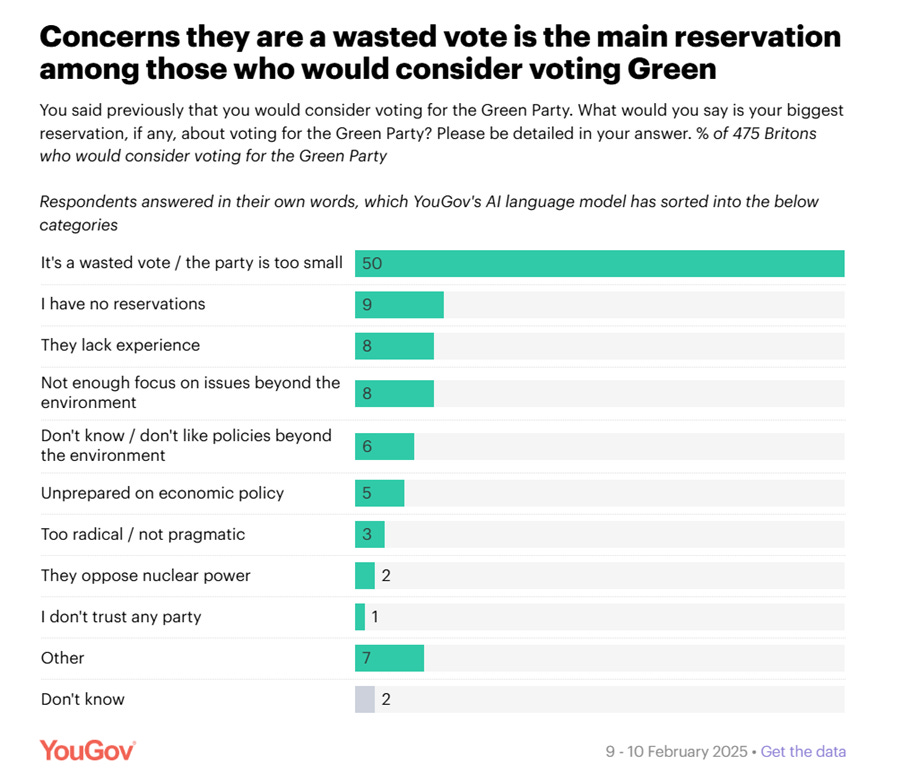
The Greens are targeting the same prize. Their potential support base is significantly larger than their current polling, but in the past those willing to consider voting for the party have often been put off by the tactical implications. In a survey of those considering but not voting Green last year, YouGov found that wasting a vote was by far the most common reason for choosing another party.
To understand whether the Greens can get into first place in their bloc, we need to look at: who their supporters are now; what their potential level of support is; whether the leadership of the party is willing to make the necessary policy changes to accommodate this bigger pool of potential voters; and whether other parties within the bloc, particularly Labour, are changing their strategy to try and prevent support from slipping away.
Keep reading with a 7-day free trial
Subscribe to Comment is Freed to keep reading this post and get 7 days of free access to the full post archives.