

Donald Trump is in trouble. His levels of approval in the United States are at all-time lows, which will likely mean the Republicans lose the House and possibly the Senate in the upcoming midterms. There are many reasons for his unpopularity, but one is the inflationary effect of the war with Iran, most obviously reflected in the prices Americans pay for fuel. Trump has played this down, saying it is not so bad or is merely a blip that will soon pass. Earlier in the war, he suggested that the cost might be worth the gain of dealing with Iran’s nuclear potential, but, as there has been no progress on that front, this original rationale for the war now barely gets a mention. The conflict is now essentially about the future of the Strait of Hormuz.
Trump’s latest ruse was to deflect blame from himself for starting a war he has failed to win by focusing instead on Russia’s withdrawal from global markets for diesel. This is because of a combination of sanctions and Ukraine’s effective campaign to take out its refinery capabilities. He has managed to give Russia a political boost at Ukraine’s expense (to which I will return in my next post), but without solving his problem. Indeed, the Iranians, who are fully aware of Trump’s political predicament, seek to make it worse. They are determined to keep oil prices high until 3 November.
According to Reuters, Iran has deployed new tactics to target ships attempting to sail through the Strait of Hormuz, using spotters on small boats now that its radars have been destroyed, and expanding the area in which it attacks ships to the Gulf of Oman and beyond. Reuters quotes an Iranian official: ‘Just when they think they are getting close to the point where prices will fall, we will push them away from it. This is a game of chess.’ The threat was of ‘complete closure soon’ unless vessels agreed to Iranian conditions to pass through the Strait. Iran has struck over 30 ships since late September, sinking two Emirati cargo vessels last Wednesday. In these circumstances, the amount of traffic rarely gets beyond a fraction of its pre-war levels.
It is hard to deal with a problem when you are unable to acknowledge it exists. Trump still talks as if he won the war with Iran months ago. When he has ordered additional air strikes, they have made little difference to the underlying situation. More demanding and risky military operations, involving ground forces, have been ruled out. For now, both sides appear to have given up on negotiations. They may resume after the midterms. While the Revolutionary Guard hardliners now in charge welcome the chance to demonstrate their power and apparent invincibility, those trying to run the country see an urgent need to sort out the economy and address the people’s needs. But they will have to wait.
And when negotiations resume, Trump will have to offer concessions to Iran if he wants a deal – far from the unconditional surrender which he once anticipated. He might try to play down any concessions by making them through fudges and ambiguous language, but that is why the tentative deal struck last June – in the form of a Memorandum of Understanding – unravelled. The key provisions on future control of the Strait of Hormuz were subject to conflicting interpretations.
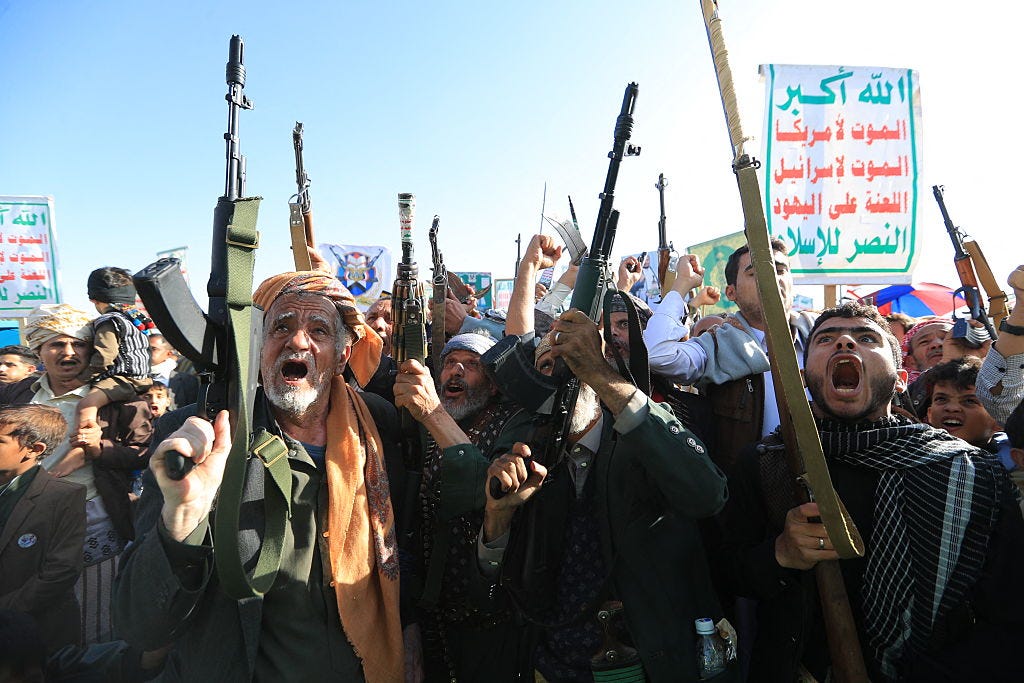
The failure to get this deal to stick and the continuing tensions have destabilised the region. Most serious in the short term is that they have led to another surge of fighting in the Yemeni Civil War between the pro-Iranian Houthis and government forces backed by Saudi Arabia.
In this post I’ll look at the origins of this conflict and the serious dilemmas it poses for the Saudis, including their inability to rely on the United States as an ally. We are becoming used to the idea of a reduced US role in European affairs, and adjustments are steadily being made to this new reality. The reduced American role in the Gulf region has been a more abrupt development, for it began with the failed assertion of American power on 28 February 2026, the day Iran was first struck, generating a crisis which is still unfolding.