

We have a couple of bonus guest posts over the next week. The first is from Ruth Patrick, a Professor in Social and Public Policy at the University of Glasgow - on a very timely and important topic as the government decides whether to finally bin the two-child limit.
Ruth leads Changing Realities, a collaboration between over 200 parents and carers on a low-income from across the UK, researchers and the Child Poverty Action Group. She also led the Benefit Changes and Larger Families study, a major mixed-methods investigation into the impact of the benefit cap and two-child limit, and currently leads Safety Nets, exploring the relationship between devolution and social security. She is a member of the Child Poverty Analytical Expert Reference Group which has been providing advice and expertise to the Child Poverty Unit on the development of the UK’s Child Poverty Strategy.
All the charts, and all the tables tell the same sorry story. Child poverty in the UK has risen over recent years with a record 4.5 million children forced to live with the realities of everyday hardship. Keir Starmer rightly listed this increase in child poverty as a legacy of the Conservative years in his first speech to the Labour Party Conference as Prime Minister. The problem for Labour is that child poverty will keep going up unless his government takes decisive action to reverse key Conservative policies.
The UK Government is preparing to publish their long-awaited Child Poverty Strategy next month, and briefings and counter-briefings abound on the two-child limit, one of the most pernicious of the long list of the Conservative’s austerity welfare ‘reforms’. The two-child limit reduces means-tested social security support for children born after April 2017 to the first two children in a household, with one in nine children now living in households affected by this policy.
Because of the way the two-child limit operates, the longer it remains in place more third or subsequent children are born into a UK in which it exists. Child Poverty Action Group estimates 109 children more children are affected by the two-child limit every day it remains in place. That means, that – as of today – 53,538 more children have been hit by the two-child limit since Starmer entered Downing Street.
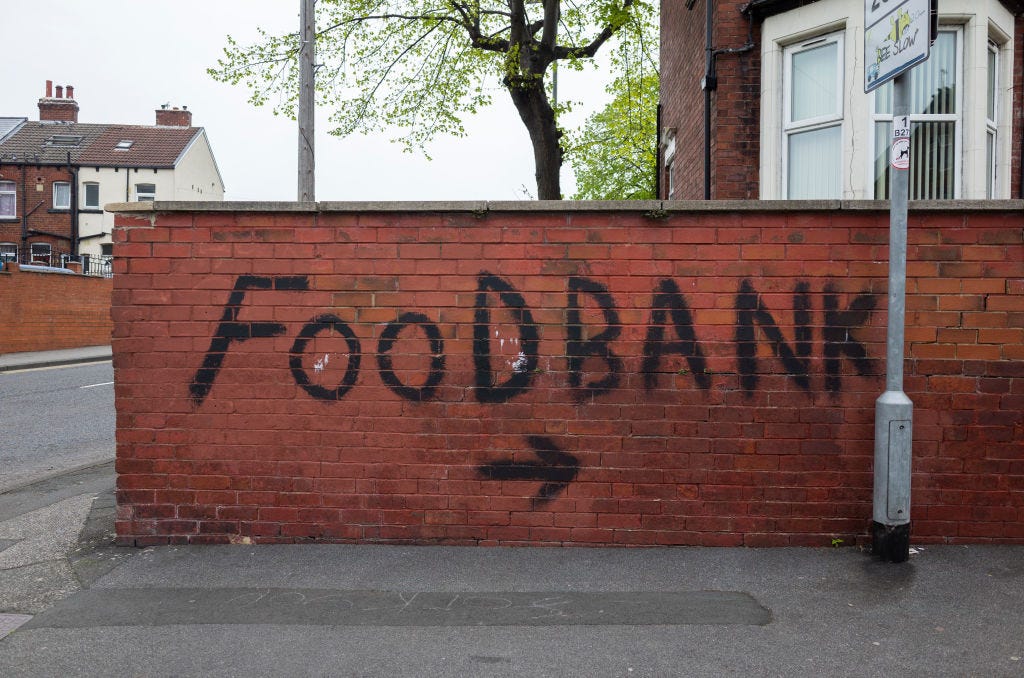
As politicians and the media debate whether the two-child limit should be scrapped, or some compromise measure adopted, we all need to remind ourselves what is at stake, and why it is so critical that Starmer’s government acts. Away from the headlines, families in poverty are preoccupied with the very hard work of getting by on low-incomes. Their daily realities are routinely distressing and dehumanising: trying to decide whether to prioritise one child’s need for new school shoes over their brother’s coat which no longer fits. Or leaving an older child to look after their younger sister while they nip to the food bank; not wanting their children to experience the indignity and shame they feel on crossing the church hall’s doors.
Through Changing Realities, over the past five years during first the pandemic and then a cost of living crisis that never went away, we have been working with over 200 parents and carers from all four nations of the UK to document both what everyday life is really like, and push for change, In online diaries, and through answers to video-elicited questions [what we call our ‘big questions of the week’], we have built up a rich, living archive of what it means to live on less than you need, And this archive serves as a potent reminder of the real, and unnecessary harm done by our inadequate social security system, the increases to the cost of living, and the long-running stagnation in wages. These personal accounts get to the heart of the lived realities of child poverty, but they are underpinned by a statistical evidence base that robustly reinforces the depth and extent of child poverty.
The cost of living is an ever present challenge, with parents routinely contrasting their own daily struggle with their ambitions for family life. They want simple things (being warm, able to afford a trip to the local swimming pool) but these very often feel out completely of reach.
Just last week, Ronnie, a disabled single parent, wrote in her diary:
We are struggling with food now. We are not starving but we are running out of the reserves of things that I usually have and then we may have no milk and basic stuff and I genuinely don’t know when I will get money to buy more… I have applied for jobs in desperation, never sure if I can manage them but also know I can’t manage life with no money for food or heating….So it’s not even as simple as I am not trying or that I don’t want a job. I know I am not alone in this health-poverty-single parent-cost of living crisis-housing crisis nightmare.
And Aurora, a widowed parent to two children, reflected on the shape of half term for those experiencing in-work poverty:
I will be working throughout [half-term] and both children will be at home whilst I work. I would like to see if I receive the supermarket vouchers as one of my children is no longer eligible for free school meals. The nights are drawing in and I put the heating on tentatively once last week. I’m all too aware of the impending costs of winter fuel. This year our heating costs have risen.
There are potentially very grave political risks for Labour if they do not act here. They would have to go into the next General Election defending child poverty rising further, and under their watch. One of the most politically misjudged things that the New Labour government did was what Ruth Lister described as their ‘redistribution by stealth’ approach; investing in social security on the quiet, too cautious to make the political case about quite why this matters, and the positive benefits it can bring. And perhaps that failure to make the case for social security as a force for good is one of the reasons why the Conservative Coalition Government were able to unravel the provision so rapidly, covering cuts in a familiar story about ‘welfare dependency’ that was never robustly challenged by Blair or Brown.
So simple even a six-year old gets it
For all the indecision, briefings and counter-briefings, you would be forgiven for thinking the two-child limit is a complex policy issue, and one where the appropriate response, especially for a government that claims to be progressive and to want to deliver change, is not abundantly clear. But this is not correct. Over lunch the other week, I was chatting to a friend about the two-child limit, and prospects for change. My six year old son piped up: what are you talking about, what is this all about, and what’s for pudding? By chance, one family has two children and the other four, and so it was easy to explain. If either family were to experience misfortune – losing work, illness or relationship breakdown – the social security system would provide the same support to both families, irrespective of the significantly greater need of the family with the two extra children to feed, clothe and keep warm.
That’s silly, the six-year old said, and his brow crinkled as he tried to wrap his head around what that would mean for him: smaller portions of pudding perhaps; and certainly none of his greatest love: Lego. It’s not always this easy to explain a social policy to a six-year old, but there is a simplicity to the cruel design of the two-child limit.
What marks out the two-child limit and its sister policy, the benefit cap, is the way both serve to decisively break the link between need and entitlement in our social security system. Using social security as a mechanism to respond to increased need is a principle, which was woven into the design of our post-war welfare state. The introduction of Family Allowances in 1946 was driven by arguments made by Eleanor Rathbone and others that a wage could not always meet the needs of all the members of a household, and that needs vary with household size. And since the two-child limit has been in place for eight years, we now have evidence of just what happens when you sever this link: poverty and unmet need rise.
With colleagues, I spent much of the last five years researching the impact of the two-child limit and the benefit cap on families with three or more children. Our mixed methods analysis showed that the two-child limit fails, even when assessed against the purported objectives its architects had for it. Taking money from families with three or more children does not increase their employment rate nor its intensity, neither does it reduce fertility among poorer households. Instead, it is a poverty-producing machine and arguably deserves its categorisation by child poverty expert, Jonathan Bradshaw as the ‘worst social policy ever’. We summarise the evidence base from across our peer-reviewed analysis in a short-brief, which we publish today.
And there is remarkable consensus on all this from across the third sector (including think tanks, charitable organisations and anti-poverty NGOs). Reports have been written, surveys conducted, and economic modelling done, and it all comes to the same conclusion regarding both the effectiveness and the vital role the reversal of the two-child limit would play in getting child poverty down. Earlier this summer, Changing Realities co-produced a report with IPPR and Child Poverty Action Group, which set out a blueprint for an effective child poverty strategy, but critically emphasised that the publication of the strategy, and the abolition of the two-child limit, should be the beginning of a much more ambitious programme of change, and one that should define the next decade.
False Starts
As we inch closer to the Child Poverty strategy’s publication, we’ve heard a lot in the media about various compromise options: a three or four child limit perhaps, or a tapered limit with the support available reducing with each additional child born. But these compromise options are fool’s gold.
Moving from a two-child to a three-child or a four-child limit would suggest that the principle that underpinned Osborne’s original defence of the policy is the right one: namely that families in poverty need to make the same choices about how many children to have as those supporting themselves solely through work. But this principle is a nonsense: only the very richest in society can make decisions about how many children to have, safe in the knowledge that whatever life throws at them they will be able to support themselves solely with their own financial means. In short, shit happens, and it can happen to any one of us. People become ill, they die, they lose jobs, and their relationships break down. Our social security system should be there for all of us to protect us should we experience any of these misfortunes, with support provided for each and every child in our household.
So why not provide a reduced level of support for third and subsequent children, something which would slightly (but only slightly) reduce the estimated £2bn the chancellor would need to find to abolish the two-child limit in its entirety? The assumption seems to be that families with three or four children can find efficiencies in their household budgets, but there are few economies of scale with larger families.
All children need to be fed, clothed and kept warm, and, if they are to flourish they need opportunities to attend extra-curricular clubs, and to know that they live in a home that is safe, secure and not in chronic financial scarcity. So a taper does not really cut it, in terms of reducing poverty risks. And it would be incredibly complex to administer, especially as the place of any child in the household will change as their older siblings reach adulthood and leave home. A third child would become the second child for these purposes when their big brother left home, and lost entitlement, and these regular changes of circumstances would be complex and costly to administer, and hard for claimants to understand.
Significantly, only a full scrapping of the two-child limit will enable this government to go out with a principled, and clear narrative on what they have done and why: creating the space to tell that old, but good and true story about why, in the New Labour phrase ‘every child matters’.
And new economic modelling, published today by the Resolution Foundation, shows that a misguided pursuit of any of the ‘partial repeal’ options for removing the two-child limit would result in child poverty rates rising during the course of this Government’s first term.
Instrumentally too, there are real risks that pursuing one of these half-way options risks pleasing nobody and generating only negative headlines. The right wing press will still attack any investment in social security, while those on the left, including perhaps the majority of the parliamentary labour party will bemoan a failure to act decisively and take a principled stand. And there’s risk that progressive voters will punish Labour if they fail to drive child poverty down, and this is reinforced by polling out this week that argued that the public will forgive increased taxes before they will forgive a failure to act here.
Shouldn’t the focus be on employment?
Cautious to lay much emphasis on social security, Labour politicians have instead returned again and again to the old ‘work is the best route out of poverty’ mantra, pledging that theirs will be the government to get employment up to 80% and that, by so doing, they will drive rates of child poverty down. Action to support parents to enter and progress in employment is always welcome, especially where this works with parents own preferences and is scaffolded by the availability of high-quality and affordable child-care. It is especially welcome if this support is underpinned by a recognition of the very hard parenting work that those with children are already doing, and how this is further intensified when children are disabled or have other additional vulnerabilities.
But Labour simply cannot shift the dial on child poverty with employment alone. Too many parents in poverty are already working, and even the promised focus on getting more second earners in families will have a only small impact on child poverty statistics. And so employment support can only ever be one part of a broader package. In Liverpool at Labour Party Conference, Pat McFadden MP took to the fringe circuit to set out some of his early thinking after recently being appointed Secretary of State for Work and Pensions. At one session, he described how ‘welfare’ reform’ (which has now somehow become synonymous with cuts to support) makes people angry because you’re taking money away from them. You could almost hear the frustration in his voice, and his implicit but unsaid reflections on the disability cuts debacle of the previous summer.
But, he cautioned, this anger is only the snapshot. We all need to look instead at the movie: what happens longer-term when you take people’s money away to encourage (read compel) people to take steps towards finding work? McFadden’s argument was that you need to be cruel to be kind, and this ‘tough love’ approach will lead to a happy ending, where people are taught to see that social security support is not the answer, and instead find productive and poverty ending jobs.
Remarkably, he gave the example of Labour’s single parent benefit cut from the early New Labour days to reinforce this spurious argument. But, in doing so, he skipped more than half of the movie – specifically the expensive employment support that was provided to single parents through the New Deal for Lone Parents and the fact that getting these parents into work was very low hanging fruit. Most importantly though, he fast forwarded right through Gordon Brown’s expensive package of tax credits which helped make work pay for single parents, and was – quite literally – the state giving money to households, rather than taking it away. Real welfare reform, some might say.
So, we can be fairly sure that – at least in how they present the policy problem – there are quite a lot of misunderstandings both of the evidence base on child poverty, and the lessons that can be learned from even our own country’s very recent past.
It is especially disappointing as we have in fact never had a greater wealth of evidence, both on the harms done when we remove vital social security income from families through policies like the two-child limit, but also of the benefits that flow when we provide targeted support for families, such as has been done in Scotland with the £26.70 per child weekly payment for families on a low-income through their Scottish Child Payment.
McFadden also spent quite a bit of time at conference reflecting on the need to take action to correct the historically high levels of economic inactivity among young people, and this was frequently connected with the Chancellor’s announcement to beef up Youth Guarantee. But there is a failure to look beyond policy silos, and to see how a generation that has been failed by a broken social security system and public sector is now perhaps ill-equipped to enter work, and – more importantly – to build happy and healthy lives. Protecting children from the harms done by financial insecurity will pay dividends in improving their future life chances.
Doing this will bring cost savings too, flowing back over the longer-term from reductions in the social, emotional and mental health harms that come with child poverty. For example, analysis for Action for Children by Public First estimated that a 28% reduction in child poverty by 2030 would be worth a minimum of £164 billion due to the changes it would trigger in reduced public services demand, increased tax revenues and lower overall social security expenditure.
Key ingredients for a strategy that works
We know that Labour’s child poverty strategy will look across four central pillars: income, costs, financial resilience and parental employment. And we know that the big – still unanswered question – is whether action in areas like efforts to reduce costs, and provide support with progression and transition into employment will be matched by action on social security.
Any strategy worthy of that name must be built on a funded commitment to invest in social security. And this must start by completely scrapping the two-child limit, and the benefit cap with it. If the Government is after bang for its buck, and crude value for money, it has been told again and again that scrapping the two-child limit is the most cost effective way of tackling child poverty, and would lift an estimated 300,000 children out of poverty overnight. And this approach must be the first step in a wider reappraisal of the role social security can and should play in a socially just and more equitable society.
While it’s the two-child limit which has dominated the political agenda, the benefit cap is also a key part of the policy infrastructure of the austerity years. Introduced in 2013, and lowered from 2016, it sets a total limit on the social security amount income families can receive so long as they are not receiving disability benefits or do not have working members in their household. While the two-child limit often acts to push families into poverty, the benefit cap deepens the poverty that families are already experiencing; and leaves many in a state of destitution when almost all of their income goes to high rents.
Analysis of the benefit cap found that families were routinely left almost entirely dependent on charitable provision, while the negative impact of the benefit cap on parents’ mental health ironically pushed people further away from the labour market, rather than closer to work. The punitive aspects of the cap left them anxious, fearful and scrabbling around to make ends meet, and did not serve as the incentive the Conservative government had suggested to move into paid work or increase their working hours. So it needs to be removed alongside the two-child limit.
The child poverty strategy should also signal action to try and support a reduction in essential costs, and efforts to improve child care systems so that parents are more able to combine their different forms of work, with a particular focus on progression for part-time and second earners, whose attempt to juggle employment with the school run often consigns them to low-paid and low-skilled work. I would caution against putting too much – if any – emphasis on the ‘financial resilience’ pillar. Families in poverty are already incredibly adept at budgeting on a low-income, and what they need is more income, and not a budgeting course, or a session on how to make savings.
As well as the substance of the strategy, Labour will also have to consider the story that accompanies it, and I hope to see here a Government that is ready to make the positive, principled case for action, and to lead on the moral case for delivering reductions in child poverty. Labour can and should tell this story, and could take pride in stepping up for and speaking out for the 4.5 million children in poverty who have been failed again and again by the politicians of recent years.
But Starmer’s Labour also need to learn the lessons of the problems with New Labour’s ‘redistribution by stealth’ approach. If you do the right thing, but do not build awareness of why you are doing it, and why it is right, then you lose the opportunity to generate wider public understanding around the issue and to move public opinion in the direction needed, both to support further action (where needed) and to prevent changes being easily repealed when a government changes.
Beyond this, Labour should celebrate the work the Child Poverty Taskforce has done in developing the strategy to work with and draw on the expertise that comes with everyday experiences of child poverty. The structured engagement the Taskforce has had with parents and carers on a low-income through Changing Realities, and which has occurred at the very highest of levels, remains a still all-too-rare example of a genuine and meaningful effort to incorporate elements of participatory policymaking into the strategy’s development. And this worked and mattered: parents made suggestions, shared experiences and developed co-produced policy solutions, and – hopefully – some of this expertise will have found its way into the strategy that is finally produced.
The clock is ticking – let’s get the job done
We were all six years old once, and all carry with us the memories from our own childhoods, and if we are parents our continued efforts to give our own children a positive and happy start in life. As one parent from Changing Realities put it, the effects of your childhood (good or bad) last a lifetime. So let’s do what we can to make sure each and every child has the very best childhood possible.
The last word goes to Joanne Barker-Marsh, a parent who I’ve been working with on Changing Realities for almost six years. Her son is now sixteen, and has grown up through the successive cuts to support and provision. Speaking at a House of Lords roundtable organised by Labour peer and poverty expert, Ruth Lister, last week she said:
An ambitious Child Poverty Strategy with a human first approach is essential to combat the rising need inside our communities, and we want to speak to this and again call for the removal of both the two-child limit and the benefit cap which are murdering the futures of thousands and thousands of children. These are political choices, and we urge the government to make the right choice, the only choice, next month. Will the removal of either of these policies help…me? No, it will not, but the Changing Realities Project was never about us simply helping ourselves. We are echoing the voices of millions of people, and we deserve to be represented in this Child Poverty Strategy, after all, it is our children who are watching and living this…

I was disappointed by this article. I’m somewhat sympathetic to the idea of two-child benefit cap, but open to being persuaded it’s as bad as the author says. However, I hoped for a more quantitative analysis. EG. what is the actual cost to families with 3 or 4 children?. I’m not surprised it didn’t affect employment rates, but am surprised it didn’t affect fertility. I would have liked to understand much more details about these aspects of the policy and her research.
Also, I don’t think opponents of the cap ever grasp they have a completely different idea of what “fairness” means than supporters do. People often believe many on benefits are long-term unemployed out of choicy. While a minority, clearly these people exist, and some have children. It strikes many people that finanically supporting these people is deeply unfair. (especially when, for example, my own peers are delaying having kids because they can’t afford it.)
In my opinion, a more persuasive argument against the cap would address this “fairness” point head on. It would help to know how many of the children missing out were born after the cap was put in place, and are the affected parents long-term unemployed (i.e., making what many consider an irresponsible decision)? On the other hand, what are the circumstances common amongst those missing out – what % are recently or temporarily unemployed, have they recently been in relationship break ups, or suffered health issues? (i.e., if the majority of those affected are sympathetic, as the author suggests, show me.)
I’d like to agree with Thomas Kirk above. I was disappointed by this article too. I’m sympathetic but felt it missed the key point about perceptions of ‘fairness’.
The policy hedges and tapers and fixes the author dismisses so quickly are exactly there to manage the perception of fairness. That is important to winning wider support for an expansion in this payment - and the political battle about trade offs needed by other groups to fund it. Sam, I’m sure I’ve seen you write positively about these before?
People do have kids and then something unforeseen happens. And, as someone who runs a benefits team in a London borough, people really do have more kids even though they are on benefits/ don’t have the income to support it.
As a good policy wonk, I believe we can construct a policy that responds to valid concerns about fairness, parental responsibility and child needs, such as the amendments outlined