
The radicalisation spiral
Why does it happen and can it be stopped?
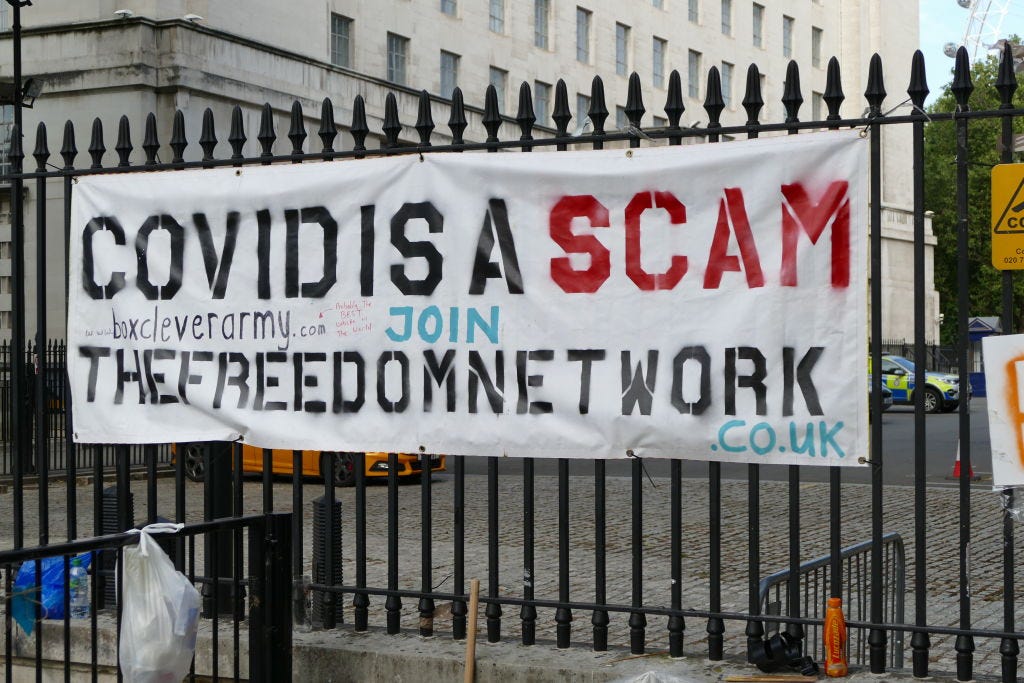
Over the last few years I’ve watched a disturbing number of people I used to know fall victim to the radicalisation spiral. It’s unnerving watching acquaintances who seemed relatively normal suddenly become obsessed with antivaxxer propaganda or start retweeting Tommy Robinson. I suspect many readers know someone, even if only tangentially, who’s disappeared down an online rabbit hole.
Obviously, radicalisation is not a new phenomenon. There have always been people prone to extreme ideological movements and cults. But social media has made it easier for those becoming radicalised to find like-minded people and for the rest of us to watch it happen in real time.
It’s also having a massive impact on politics. In an attention economy people willing to say extreme things are a valuable commodity with increasing access to power. In the US a radicalised former Democrat, Tulsi Gabbard, is Director of National Intelligence, conspiracist podcasters are in charge of the FBI, and a leading antivaxxer is Secretary of Health. And it can’t help but have an impact on the unradicalised who are spending more and more of their time trying to rebut nonsensical claims, using up energy that could be spent solving real problems. By trapping the rest of us in virtual Augean stables, the radicalised get to control the conversation. But how can they be ignored when they have such influence?
As a result I’ve become fascinated with the question of why certain people seem more susceptible to the spiral than others. Some possibilities can be ruled out. It’s not about intelligence or education. Very smart and qualified people can spiral and indeed are often better at the cherry-picking required for convincing conspiracism. Nor is it about mental illness: we might talk colloquially about people “going crazy” or “losing their marbles” but there’s no correlation between actual medical conditions and radicalisation. It’s certaintly not about economic deprivation – it’s happened to the world’s richest man and plenty of others who are well off.
A few years ago Naomi Klein published an excellent book called “Doppelganger” about Naomi Wolf, who Klein got confused with so often it became a meme. Wolf went through a dramatic radicalisation spiral, going from leading feminist author to endorsing bizarre health-related conspiracies to becoming an antivaxxer and regular guest on Steve Bannon’s podcast. Klein offers an equation for the process:
Narcissism(Grandiosity) + social media addiction + midlife crisis ÷ public shaming = Right-wing meltdown
While she was being somewhat tongue-in-cheek there is, as she says, “some truth to that bit of math”. But it needs broadening out. After all plenty of people not well known enough to have a public shaming go down the spiral. And there are lots of us addicted to social media and at least susceptible to a midlife crisis who seem to avoid it.
The “right-wing” aspect is also worth investigating. Radicalisation can, of course, happen in every ideological direction, just as one can have right or left-wing views without being radicalised. Much of the academic literature on the topic relates to Islamic fundamentalism, and if you spend too much time on social media you’ll come across Stalinist cults and sects of parodically intolerant leftists. But there is definitely a trend for left/liberals, like Wolf, to radicalise rightwards, with not much coming in the other direction.
So in the rest of this post I’ll start by breaking down the common themes of the radicalisation process, then look at why it seems so much more common to radicalise rightwards, and finish by asking whether there’s anything we can do make it less likely to happen.
Keep reading with a 7-day free trial
Subscribe to Comment is Freed to keep reading this post and get 7 days of free access to the full post archives.