We’re delighted to have a guest post today from John Kingman, who has written for us before, and Baroness Shriti Vadera.
They are publishing a series called The Growth Papers, in association with the School for Government and the Policy Institute at King’s College London, setting out what it would take to put the UK onto a meaningfully stronger growth path. The first paper was on devolution and the series will cover competition, AI, planning, energy and universities. Today’s paper looks at what they believe is the UK’s single biggest near-term growth opportunity: the corridor between Oxford and Cambridge. They have written a compelling overview of their proposals for us.
John is Chair of Great British Railways and Barclays UK. He was previously Chair of Legal & General (2016-26) and UK Research & Innovation (2016-21); before that he had lead responsibility for growth policy for many years as an official in HM Treasury where he was Second Permanent Secretary.
Shriti is Chair of the Royal Shakespeare Company, Co-Chair of the Creative Industries Council and Chair of the World Bank Private Sector Investment Lab. She was previously the Chair of Prudential plc and Santander UK, non-executive director of AstraZeneca, Senior Independent Director of BHP; Minister in the Cabinet Office, Business Department and International Development Department; and led growth policy in the Council of Economic Advisers at HM Treasury.
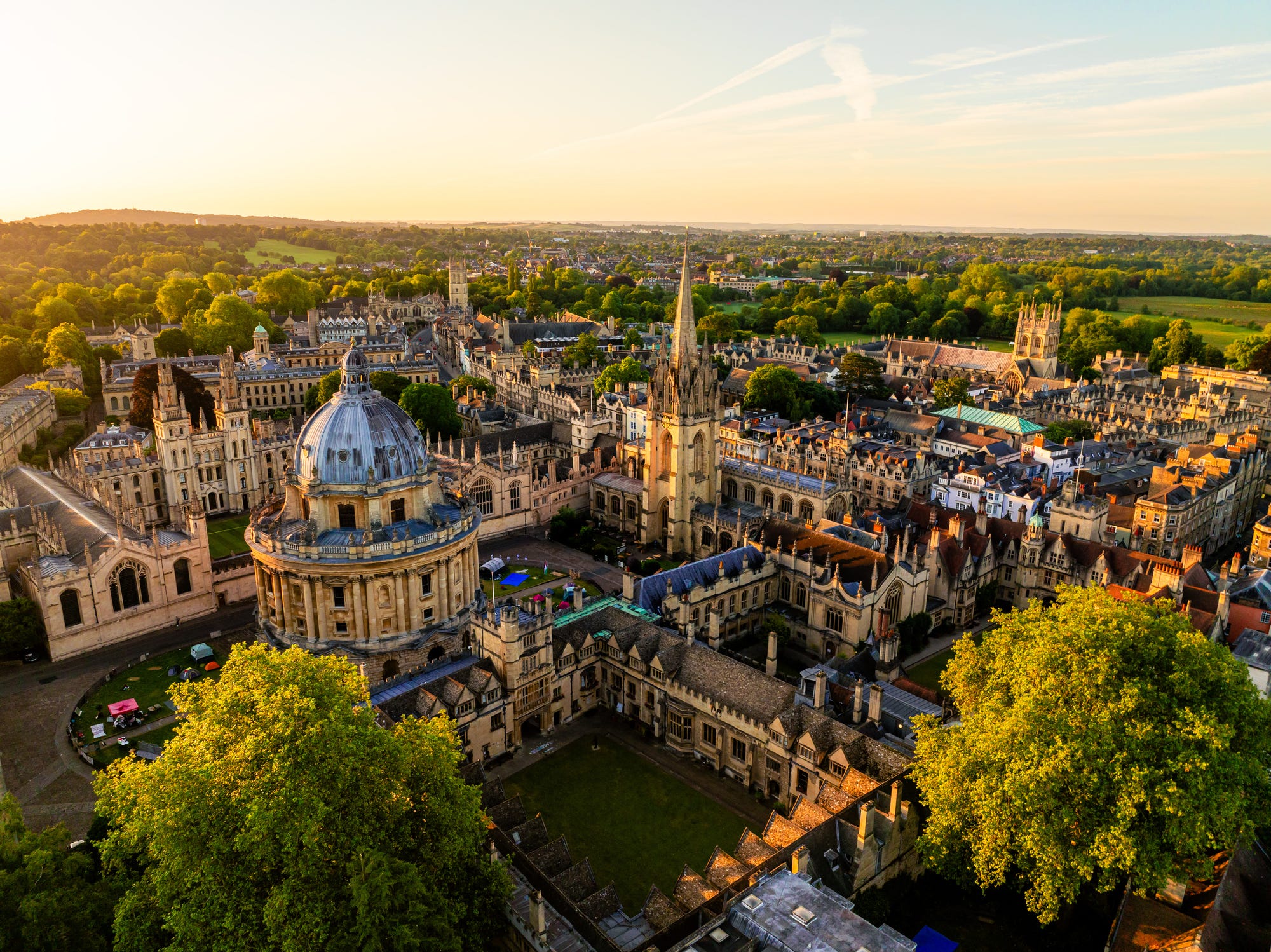
Oxford and Cambridge are, on most measures, two of the five most innovation-intensive places in the world, and relative to its size only Silicon Valley out-innovates Cambridge. Global firms continue to vote with their feet: AstraZeneca and GSK are between them putting some £600m into new research facilities on the Cambridge Biomedical Campus alone.
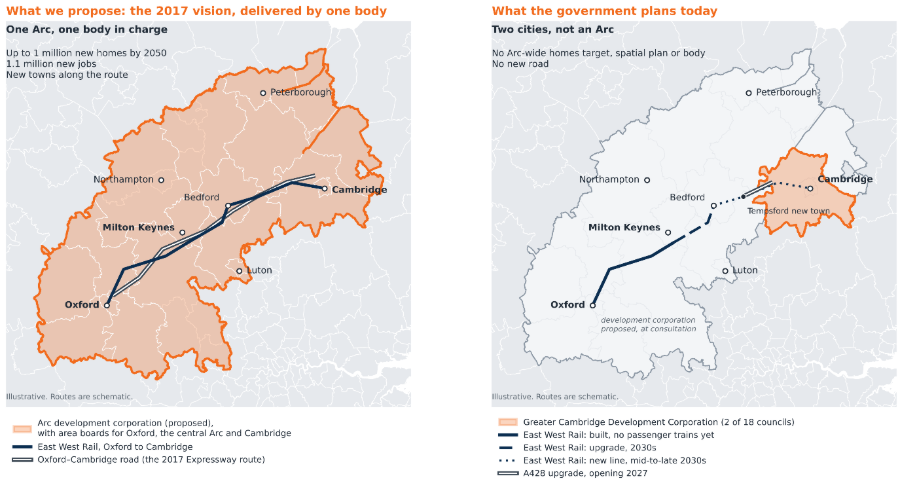
And yet a journey between the two cities by public transport still takes up to three and a half hours. Only about 406,000 people live within an hour of at least two of Oxford, Milton Keynes and Cambridge, compared with some 3.5 million within an hour of both Amsterdam and Rotterdam, which are roughly the same distance apart. So, three of the most productive economies in the country, all within 70 miles of each other, function as separate places, each tied to London rather than to each other. Linked by rail and road, with new homes along the route, they could instead work as one labour market and one world-class cluster. East West Rail alone would roughly double the number of workers each city can draw on, with towns such as Bedford, Bletchley and Bicester housing the people those firms need to hire.
In 2017, the Government of the day had a bold plan to transform this, with up to a million new homes, a new railway and a new expressway linking the three cities, and new towns along the route, but that vision has since been almost entirely abandoned. The paper we are publishing today argues that it should be revived, sets out who should be put in charge of delivering it, and includes new financial modelling showing how it could pay for itself.