
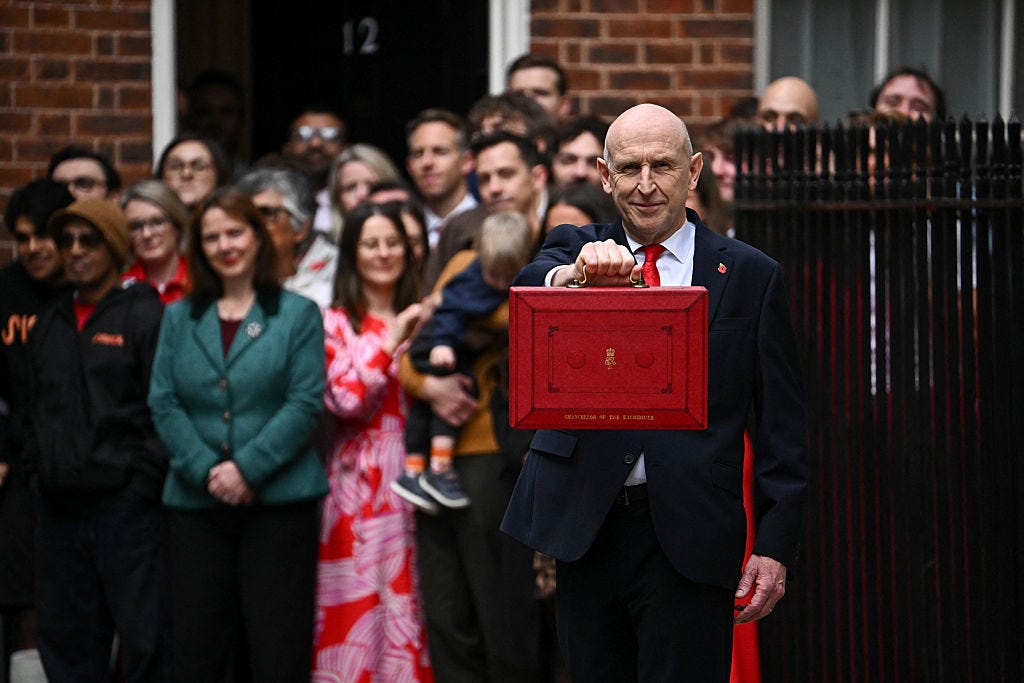
By far the most interesting thing about budgets these days is the Office for Budget Responsibility (OBR) forecast published alongside them. It is the one bit that governments can’t control or leak in advance. Rather than focusing on the headline cost of living giveaways and tax tweaks, it highlights all the risks and problems being stored up for the future. The icebergs in our path.
This budget was particularly anodyne, and deliberately so. As I’ve been saying for the last few months, the aim was to get through it with as little drama as possible and no unpopular tax rises. John Healey will be happy with the muted reaction.
The politics of this are fairly obvious. Labour has built a decent poll lead over Reform and the Tories since Burnham took over. They’ve done this by avoiding excitement, making lots of small cost of living gestures, while seeding the idea of bigger changes over the longer term. The aim is for a steady, measured and consistent story, in contrast to the confused and frantic mixed messages of the Starmer era. It is undoubtedly a more effective strategy.1
But, of course, avoiding drama now comes at the price of delaying decisions that will have to be made next year, when the government has to set out its spending plans for the rest of the parliament. The absence of substantive changes in the budget means headroom has fallen against the government’s main fiscal rule, driven by higher debt interest payments. Protection against the challenges to come has been eroded.
This is where the OBR forecast comes in. It gives us a lot of clues about the decisions the government is putting off – not just on public spending, but on other major policy issues like welfare, housing and immigration. So in the rest of the post, I’ll look at seven things we learnt and what they mean for the government’s future.