
The gap that never closes
Why we're thinking about inequality the wrong way
I’ve spent much of my career trying to reduce the gap in exam results between children from low-income families and everyone else. In government I helped introduce extra funding via the “pupil premium”. After leaving I worked for Teach First, whose mission is to get great teachers where they’re most needed. I’ve been a trustee of numerous education charities all targeting the same goal.
None of it worked.
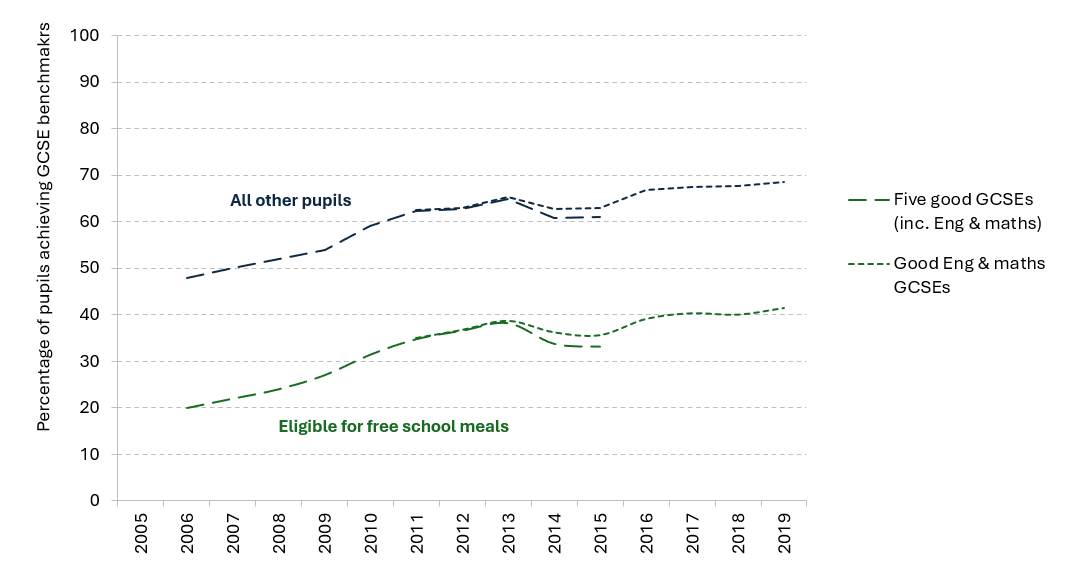
Which is not to say it was all worthless. The overall quality of education has improved, one of the few policy success stories in England in recent decades. But as per the chart above from the IFS, the gap remains stubbornly persistent. (And since 2020 has widened a little).
In line with all recent governments, the current one has set targets to try and close the gap, and proposed various initiatives, but they won’t work either. The problem isn’t the policies, the effort from teachers and school leaders, or even funding. It’s the structure of the system itself, which is why a similar gap exists in almost every country. Ours isn’t even particularly bad by global standards.
Politicians like to talk about school systems as if their sole purpose was to give all young people the necessary skills and knowledge to succeed in life. This is a universal goal that, in theory, everyone can benefit equally from. But in reality much of the system is focused on ranking children to help sixth forms, universities, and employers select recruits. By definition, the benefits here cannot be universal as the aim is to create a hierarchy. Because this ranking process is so critical to future income and status, wealthier parents will, rationally, invest huge sums to ensure their children do well. That means however much the average performance in the system improves, the gap will always be sustained.
Yet because politicians never want to talk about this aspect of the system, most of their policy suggestions miss the point. If we’re serious about reducing inequality we need to start thinking differently about what that would really take.
Keep reading with a 7-day free trial
Subscribe to Comment is Freed to keep reading this post and get 7 days of free access to the full post archives.