
Seven things we learnt from the elections

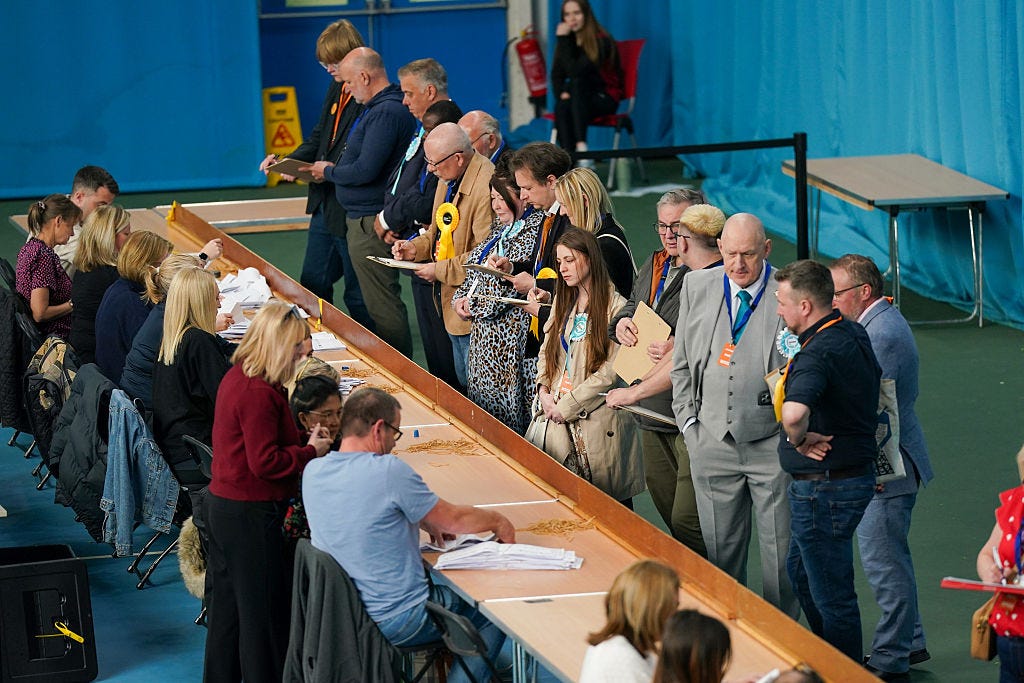
Hopefully Comment is Freed readers will have felt a sense of familiarity as election results came in over Thursday night and Friday.
While I certainly didn’t get all my predictions right, with a few exceptions all the contests played out along the lines set out. I forecast the correct result in 107 out of 136 English councils, and close to the exact Welsh Senedd results. If you’re interested in a more detailed analysis of what I got right and wrong I’ve included an appendix at the end.
In my last post I said there was no plan from any of the main candidates to challenge Keir Starmer for the Labour leadership after the scale of their losses became apparent, but that these things can spiral when MPs and members are at their most angry and frustrated. Yesterday’s intervention from backbencher Catherine West, who has said she will challenge Starmer tomorrow if no one else comes forward, it a perfect example of this. It seems unplanned and, in part, a response to a friend losing their council seat.
Whether she succeeds in forcing a challenge will depend on how others react. 80 MPs are required to trigger a contest, and there are many more than that who want Starmer gone. But lots want Andy Burnham to replace him and so need a longer timetable while he finds a way back into Parliament. Others, who support Wes Streeting or Angela Rayer, will be waiting for a signal. Plenty who are uncommitted will be spending the day furiously WhatsApping each other and trying to figure out what to do. If it doesn’t happen now, it will happen at some point. Starmer’s authority has been gone for some time.
The purpose of this post, though, is not speculation on Labour’s leadership but to look at some of the broader trends and shifts that have become apparent during these elections and have long term significance for the future of British politics.
I’ve discussed some of the more obvious ones before. We’re experiencing a transition into a more fragmented European-style multi-party system. Labour and the Tories are facing competition for their core vote in a way they never have before. As a result they are struggling to identify strategies that allow them to retain previously loyal voters, while appealing to the centre, as Reform and the Greens hoover up the right and left bloc votes. The result is a paralysis of indecision and an increasingly dissatisfied electorate. And so the cycle continues, made worse by an electoral system unsuited to our new politics that encourages a narrow tactical approach from parties.
In the rest of the post I’m going to focus in more detail on how this is all playing out in practice. How do we assess results in such a messy system? What are the strategic challenges facing all the main parties? Is Reform on track for a majority? What can the Greens realistically achieve? What are the best options for the Tories, Labour and Lib Dems? What can we learn about PR from what happened in Wales? Most of all – is there any route out of the paralysis induced by a fragmented system?
Keep reading with a 7-day free trial
Subscribe to Comment is Freed to keep reading this post and get 7 days of free access to the full post archives.