
Rayner and the Reshuffle
What's Starmer trying to achieve? How might the deputy leadership election play out?

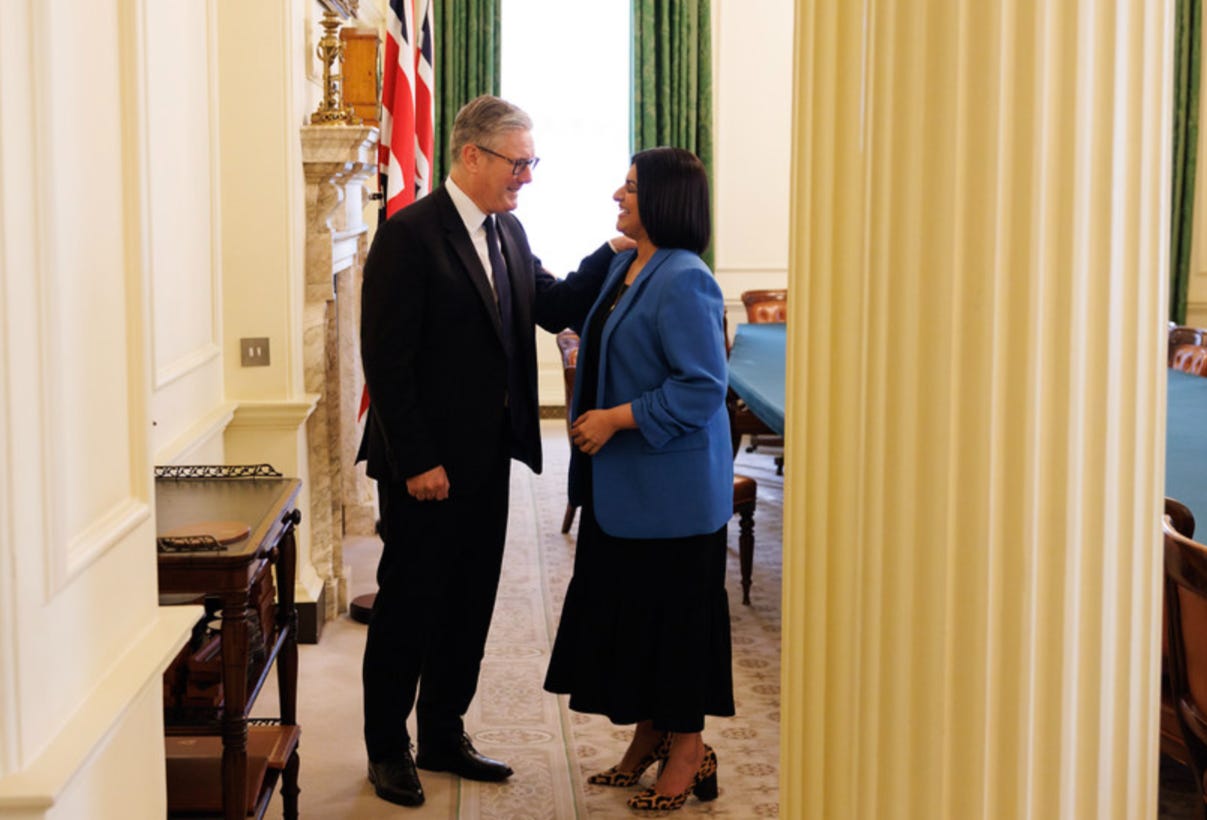
Resignations, even of very senior ministers, often turn out to be inconsequential. The machine rolls on, the agenda stays the same, and the media move on to the next thing. Angela Rayner’s is different for four reasons:
Resigning her deputy leader post, as well as her ministerial offices, means an election for that job. An election means giving Labour’s membership the chance to vent their frustrations with government performance and is potentially destabilising in ways a normal resignation is not.
Prior to the stamp duty mess blowing up Rayner was the overwhelming favourite to replace Starmer should he quit for any reason. This was a stabilising factor ensuring loyalty from anyone else who might have ambitions for the top job. It’s now much less clear who would be in the running, which could lead to more jostling for position, especially if the Prime Minister starts to look weaker after a difficult budget and/or nasty election results in Wales/Scotland and English councils next year.
Rayner was in charge of a large part of the government’s agenda – the employment rights bill, the devolution bill, planning reform and the pledge to build 1.5 million houses. Her Ministry of Housing, Communities and Local Government (MHCLG) was one bit of government working relatively well.
It’s triggered a much more significant reshuffle than most expected, including machinery of government changes that will have major effects on policy delivery. Starmer and his advisers decided to take the opportunity to launch a proper reset, showing just how frustrated they are with the position the government has got itself into. But it’s also fraught with risk, with the potential for all sorts of unforeseen consequences. Moves on this scale risk slowing the government down again just as a whole load of policy work was nearing completion, as new ministers get to grips with their portfolios. It is really not ideal to have so many changes just a year into government.
I’m not going to dwell on Rayner’s resignation, as that has been well covered elsewhere. But while she clearly made a big mistake in not getting proper advice from a tax specialist, the resignation itself was well handled. It was done relatively quickly and with a statement from the Prime Minister’s Ethics Adviser, Sir Laurie Magnus, that she “acted with integrity, and with a dedicated and exemplary commitment to public service”. As such she is well set up for a return in 12-18 months’ time, and can spend the interim building relationships with backbench MPs that ministers don’t have time for. She is a savvy operator and I’d be very surprised if this was the end of her involvement at the top level of politics.
In the rest of the post I’m going to focus on the reshuffle, the rationale for the moves, and the potential consequences, both intended and not. And then I’ll look at the deputy leadership contest and what it could mean for Starmer.
Keep reading with a 7-day free trial
Subscribe to Comment is Freed to keep reading this post and get 7 days of free access to the full post archives.