
Race to the bottom
Falling immigration is pushing the right to further extremes - will it work?
One of the most important questions in British politics over the next few years is whether the ongoing and substantial fall in immigration leads to a drop in public concern about the issue.
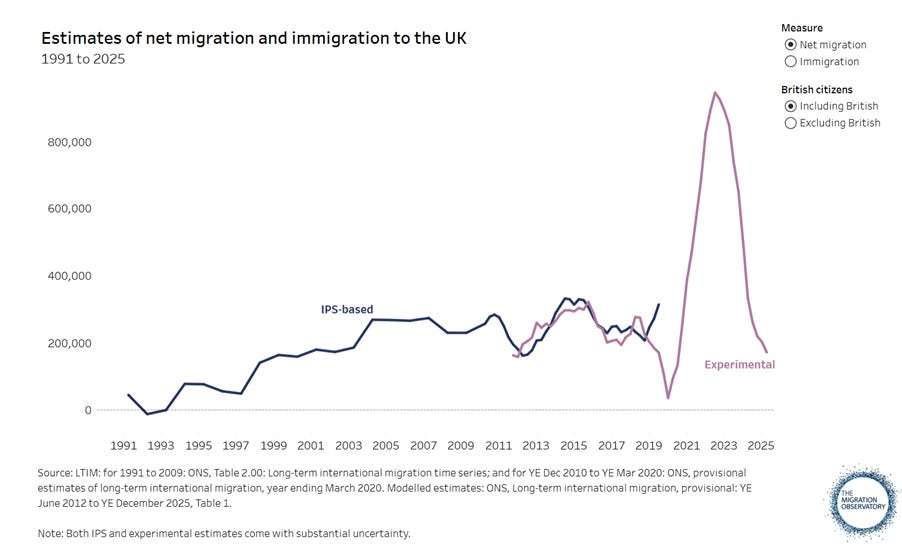
In 2025 net migration fell to 171,000 from a peak of 944,000 in 2023. As I wrote last year, we can already see in the data that it will keep falling and possibly go negative for the first time since 1993.
Small boat crossings are down 37% this year. The number of asylum seekers in hotels has fallen 32% since December. These numbers are also likely to keep dropping given that migration into Europe is well down and the government is now processing those in the system faster.
Yet in Ipsos’s long-running poll series, immigration remains the number one issue for the British public.
One possible explanation is that people just haven’t noticed it’s falling yet. According to British Futures immigration tracker, only 16% think numbers went down last year, compared to 49% who believe they increased. 62% of voters considering Reform say numbers are rising and 67% that they will go up again next year.
So perhaps there’s just a lag and the salience of the issue will fall over time, especially if net migration gets close to zero and channel crossings keep falling. As you can see from the charts below there is, historically, a reasonably close relationship between changes to net migration and how much people care about the issue. There is also some indication in the Ipsos data that concern has peaked (51% said it was a top issue last autumn, and it’s down to 41% now).
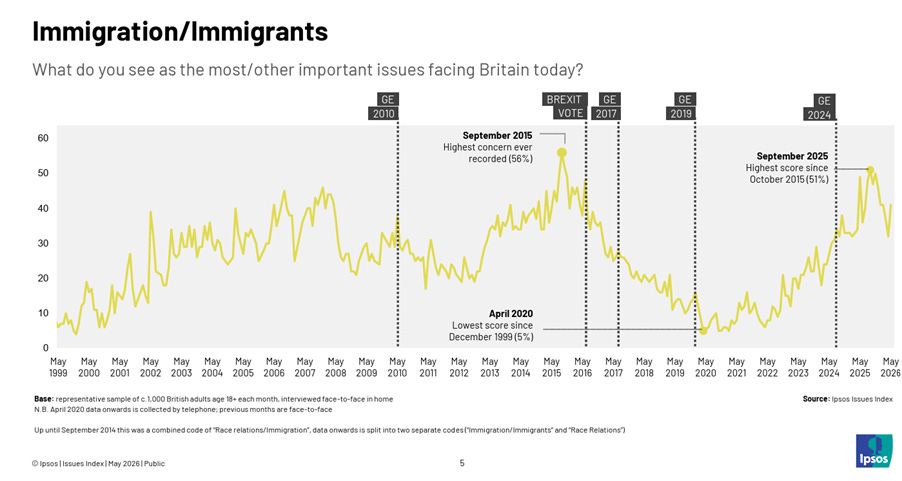
But there are big differences with previous bouts of angst about migration. For a start it is now a much more polarised issue. Back in September 2015, when concern was last peaking, 52% of Tories said it was a top issue. But so did 35% of Labour voters. A gap but not a huge one. Now 83% of Reform voters put it in their top three, compared to just 17% of Labour supporters and 16% of Greens.
This changes the political dynamic a lot. Reform isn’t quite a one-issue party but it’s not far off. On economics and public services there’s not much alignment between their voters and the leadership. It’s concern about immigration that drives their support, which is why they talk about it all the time. They, and their allied media, have an extremely strong incentive not to let the salience of the issue drop. While it has, in the past, risen and fallen with net migration that’s partly because the media have covered the issue less when numbers were dropping.
The emergence of Restore as a threat to Reform from the far right has only exacerbated this. Before Rupert Lowe’s breakaway party started picking up support Farage’s team were trying to broaden their base by focusing on some other topics. But they’re now terrified of being outflanked.
In the rest of the post I’ll look at how Reform is trying to keep migration at the top of the political agenda, and why it’s a strategy that I think will, ultimately, fail.
Keep reading with a 7-day free trial
Subscribe to Comment is Freed to keep reading this post and get 7 days of free access to the full post archives.