
Putin and the Cliff-Edge Fallacy

Over the past few weeks there has been a definite shift in the narrative surrounding the Russo-Ukraine War. This is the result of problems with the Russian economy, irritation with restrictions on everyday life, including use of the internet, Ukraine’s success with long-range drones, and a sense that a war supposed to be over quickly four years ago still has no obvious end in sight. It was hard not to miss the symbolism of the truncated 9 May parade, the annual celebration of the victory over Nazi Germany. This used to be a grand and intimidating affair, full of the most advanced military equipment, showcasing an army ready for battle. This year’s demonstrated the opposite, a lack of military confidence and a paranoid Vladimir Putin. Ukraine’s President Zelenskyy took some delight in giving him permission for the event to take place without disruption.
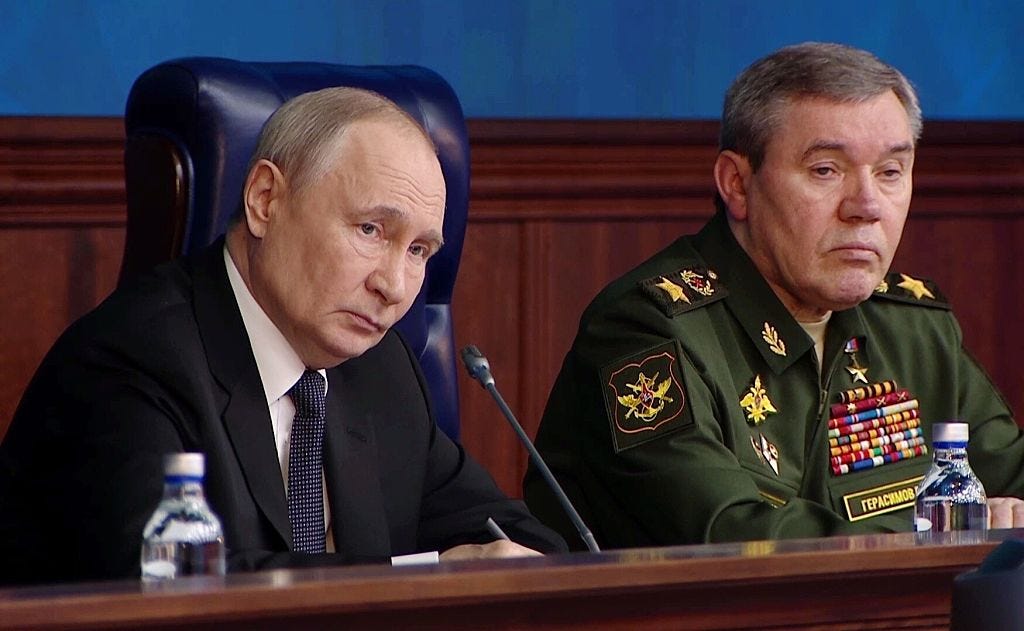
Nonetheless, for reasons that are well known, not least his personal commitment to the cause of returning Ukraine to Mother Russia, Putin is reluctant to scale down his maximalist objectives. He seems to be aware of the negative economic and domestic political trends, and he knows all about Ukrainian long-range drones, as his anxieties around the 9 May parade demonstrated. But he relies on what he is told by his General Staff on the state of the fighting, and they have been relentlessly optimistic and boastful.
In his short speech at the parade, Putin blamed Ukraine’s western supporters for its resistance while promising that this would be to no avail.
‘They are confronting an aggressive force armed and supported by the whole bloc of Nato. And despite this, our heroes move forward.’
According to the Financial Times
‘Russia’s top commanders have convinced Putin their forces could seize the whole of the Donbas by autumn, according to two people in contact with the Kremlin leader, two others familiar with the matter, and a Ukrainian intelligence assessment shared with the FT. Putin then plans to raise the price of any ceasefire by escalating Russia’s territorial demands, three of the people said.’
…
‘Putin has grown increasingly fixated on capturing the Donbas despite privately expressing a willingness to freeze hostilities on the current front lines at various earlier points in the war, according to two people who speak to him. “I have been pushing him to end at the current front lines. But he keeps saying, “No, I can’t compromise on this,” one of the people said.’
Putin’s response to the victory parade fiasco and media suggestions that the Russian position was weakening was typical. Propaganda was stepped up and he looked for ways to assert Russian power. The Russians broadcast a meeting between Putin and Sergei Karakayev, Russian Federation Strategic Missile Forces commander. Karakayev reported on a successful test launch of Russia’s most advanced ICBM, called Sarmat. A video showed its launch from the Plesetsk Cosmodrome in the Arkhangelsk region. Putin congratulated Karakayev. ‘This is the most powerful missile in the world,’ he gushed, ‘The total yield of the warheads delivered is more than four times greater than that of any existing most powerful Western analogue.’ Whenever Putin worries that western countries may think Russia weak he seeks to reinforce deterrence by reminding them of Russia’s nuclear strength.
And then after an attack with 139 drones the previous night, on the afternoon of 13 May to remind the Ukrainians of their vulnerability a massive attack using 753 drones was launched against cities across the country. Although 710 were shot down many were killed and injured. The next day 56 missiles were used in an overnight attack, along with 675 drones. A residential building in Kyiv was struck, leaving 24 people dead, including three children.
The intention was to convey strength but these moves could as easily be interpreted as weakness. They do not represent a new strategy for winning the war. Moreover in its response Ukraine underlined one reason for Russian anxiety. Large number of drones are now flying from Ukraine into Russia and they are more strategically targeted. Strike after strike has hit Russian oil refineries and military industries. In recent days they have struck a massive chemical plant, making raw nitric and acetic acids used to forge high-explosive artillery shells, motor fuel assembly lines at Gazprom’s Astrakhan gas processing unit, and the Rosneft oil refinery. Last night in one of their largest coordinated drone operations of the war they reached the Moscow region, triggering fires at the Moscow Oil Refinery in Kapotnya, the Solnechnogorsk oil terminal, and the Elma electronics technology park in Zelenograd.
For now Putin is sticking with the same formula that has not worked for over four years. What if this approach continues to fail? Will there come a point in the coming year when he is compelled to accept that the goals of the special military operation will never be met?
Keep reading with a 7-day free trial
Subscribe to Comment is Freed to keep reading this post and get 7 days of free access to the full post archives.