
Left in the dark
The impact on the Russian army of losing access to Starlink and Telegram

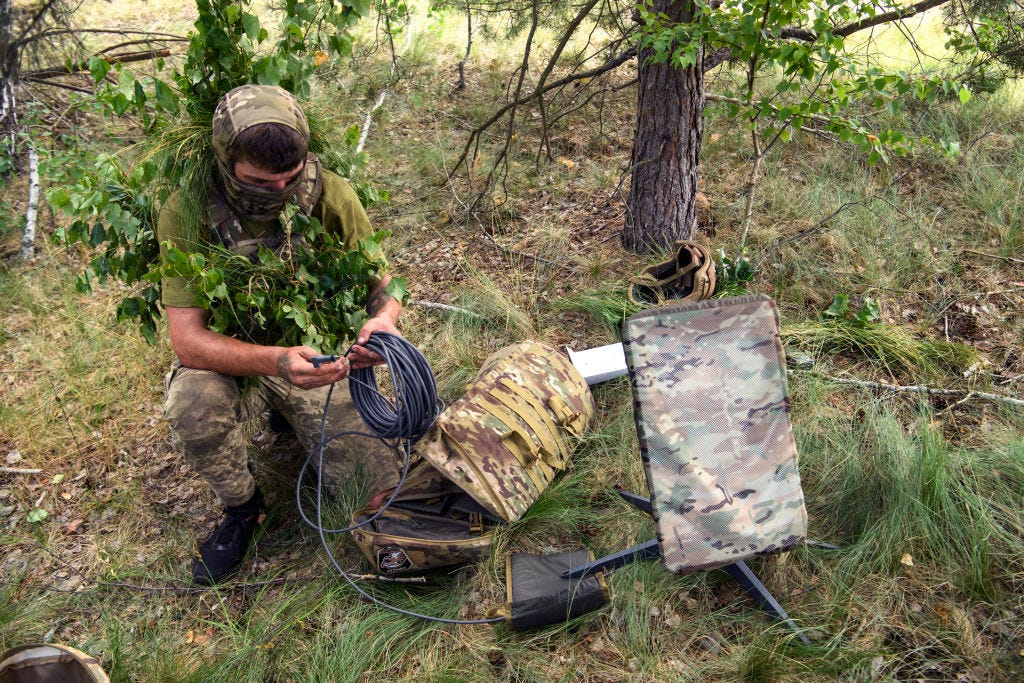
A Ukrainian soldier using the Starlink system (Photo by Maxym Marusenko/NurPhoto via Getty Images)
One of the distinguishing features of modern warfare is the connectivity expected on the battlefield. Commanders watch multiple screens containing the latest information on the whereabouts of the enemy and the availability of units. They can identify targets for artillery and drones, transmit them to the operators, and then track the progress of strikes. Meanwhile ordinary smart phones have become invaluable tools of communication.
So important has this connectivity become that any loss is potentially catastrophic. Cutting it off is therefore a natural objective for an enemy. We currently have an unusual experiment underway on the front lines of the Russo-Ukraine War which will provide a test of the importance of this sort of connectivity and the ability of a force denied it to adapt.
Both sides have been using tens of thousands of Starlink terminals for their internet-based activity. The difference is that Ukraine’s use was authorised while Russia’s was not. Earlier this month Russia’s terminals were turned off. It is still early days but already we can see some effects. This story also reveals something about Russia’s approach to developing its military capabilities.
To add to the test Russian forces faced another blow, this time inflicted by their own government, when the Telegram messaging service upon which many relied for communications, was deliberately degraded, with slower downloads and intermittent connectivity. In this post I look at how these losses came about, what it tells us about the Russian military machine, and what has been reported about the immediate impact, including a developing Ukrainian counter-offensive.
Keep reading with a 7-day free trial
Subscribe to Comment is Freed to keep reading this post and get 7 days of free access to the full post archives.