
Groundhog Day?
The state of the current negotiations over Ukraine

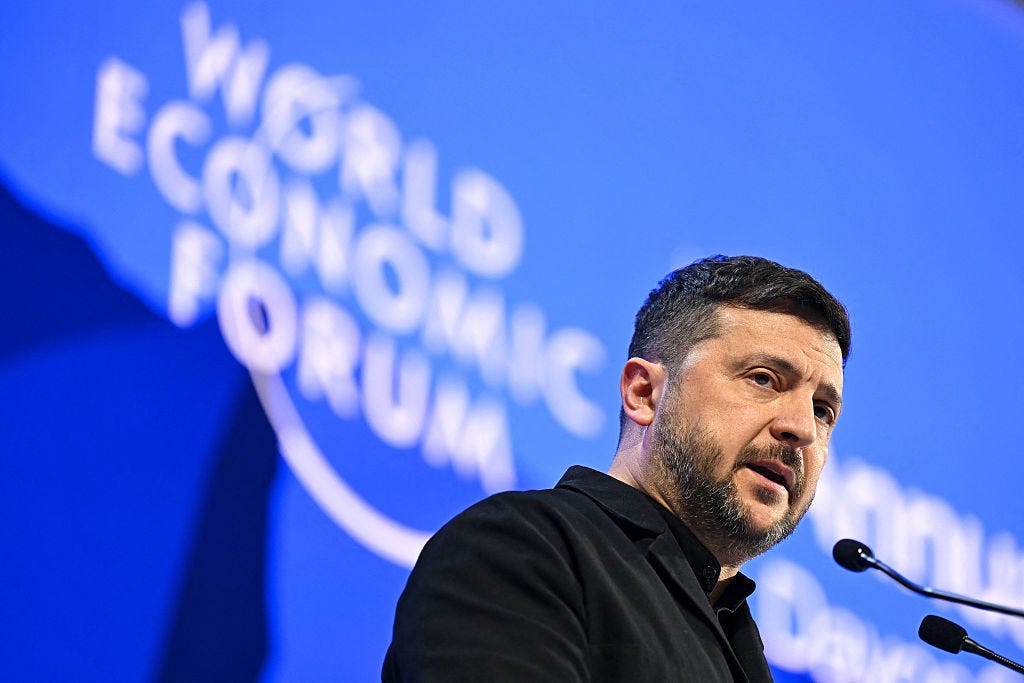
In his speech at Davos last Thursday Ukraine’s President Zelenskyy referred to the movie ‘Groundhog Day,’ in which Bill Murray plays a cynical journalist caught in a time loop, reliving the same day over and over again.
‘Just last year, here in Davos, I ended my speech with the words: Europe needs to know how to defend itself. A year has passed. And nothing has changed. We are still in a situation where I must say the same words again.’
Ukrainians were also caught in their own time loop:
‘repeating the same thing for weeks, months and, of course, for years. And yet that is exactly how we live now. It’s our life.’
It was unsurprising that Zelenskyy was in a grumpy mood. He had intended to give Davos a miss. It was not a good time to leave Kyiv. Much of the city is still without heat and light in dire winter conditions because of incessant Russia strikes against Ukraine’s energy infrastructure. Insufficient air defences are another symptom of the gap between European promises and delivery. A heavy price is being paid for every Russian drone or missile that gets through. Some worried whether he was wise to rebuke Europeans who provide so much support, but Ukrainians don’t see this as charity but an essential contribution to European security. Ukraine is suffering in defence of European democracy.
He made the arduous overnight journey because he had been summoned by Donald Trump on the Wednesday to discuss the latest iteration of his peace plan. Trump claimed that the two sides were:
‘at a point now where they can come together and get a deal done. And if they don’t, they’re stupid — that goes for both of them — and I know they’re not stupid.’
Trump’s envoys, Steve Witkoff and Jared Kushner, were off to meet Putin, while trilateral talks were scheduled for Abu Dhabi on 23 January. So Zelenskyy decided that he had best not stay away despite there being no evidence of any softening of the Russian line.
Zelenskyy’s strategy has been to show willing, to work on the plan as constructively as possible, and to ensure that Russia gets blamed if the effort fails. After Zelenskyy met with Trump he reported that the discussions had gone well and that progress had been made. According to Witkoff:
‘The Ukrainians have said that we’re 90% done and I agree with them. In fact, I think that we’ve made even more significant improvement. I think everybody is embedded in the process and wants to see a peace deal happen.’
But that assumed that the Russians would accept the 90 percent without amendments and additions. With all negotiations it is the last 10 percent that is the most difficult, a point confirmed when Zelenskyy identified ‘territory’ as the main item left to be sorted.
The pattern of these negotiations must reinforce Zelenskyy’s sensation of being caught up in a time loop. Each stage follows the same pattern. Trump gets persuaded that Putin has a genuine interest in peace and is ready to make a major concession. Zelenskyy, with European help, manages to get the US proposal to something moderately sensible. This is inevitably unacceptable to Putin. But instead of a rebuff leading to a US turn against Russia, Putin finds a way to follow the same sequence again. This is not because he expects much to come of it but because he also does not want to be blamed for any failure, lest Trump then decides to step up the pressure on Russia. The problem, Putin insists, lies with unrealistic Ukrainians and meddling Europeans.
Yet this process has moved the negotiations to trilateral talks taking place in Abu Dhabi. Issues of substance are being addressed. In the rest of the post I look at the build up to these talks in Abu Dhabi and whether and how they might break the pattern.
Keep reading with a 7-day free trial
Subscribe to Comment is Freed to keep reading this post and get 7 days of free access to the full post archives.