
Burnham's policy agenda
What we know about what he wants to do
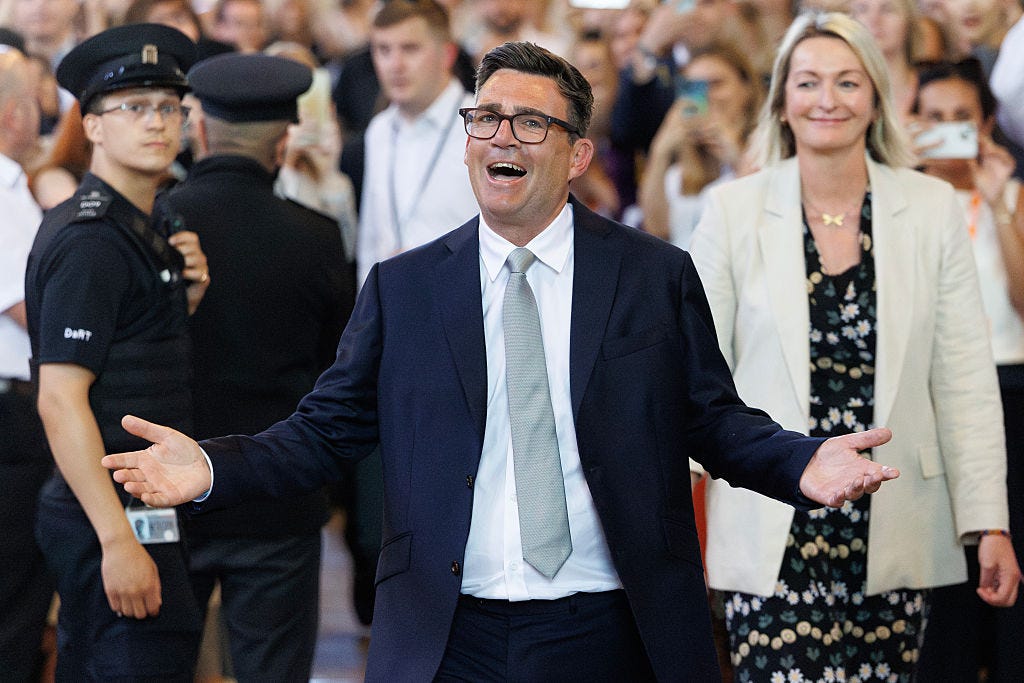
The end of Keir Starmer’s premiership had become so inevitable that his decision to go caused little excitement in Westminster. Thoughts turned some time ago to what a Burnham administration will look like. The jostling for jobs and lobbying by special interests was already well underway. It’s not a sentimental place.
Last month I looked at what the new Downing Street set up might be, some of the big decisions Burnham will face on arrival, and gave a high-level overview of potential policies. In this post I’m going to zoom in on the third of these themes and look in more detail at the emerging policy agenda.
There is plenty of scepticism about Burnham (including from within the Labour party). Those who’ve reported on his time as Greater Manchester Mayor note his tendency to say what people want to hear, duck difficult decisions and change his mind under pressure. He’s not a policy wonk and isn’t always on top of the detail, as we saw from various missteps during the by-election. He can wear his views lightly.
But those who say he will just be Starmer with a northern accent and better dress sense are missing that Burnham has developed a network of policy thinkers around him who do have a clear sense of what they think needs to happen. The same themes keep reappearing in his interviews and statements and will be repeated in a series of speeches over the next fortnight. There is an ideology there even if it’s flexible. Much of this has been written up in think-tank reports or provided the basis for policies Burnham has pursued as Mayor.
This programme is being studied in the Treasury and cabinet office and will form the basis of an agenda. So it’s worth analysing in more detail both to understand the likely animating principles of a new government and how much of it will survive given fiscal constraints and political realities. Especially given the degree to which Burnham has already boxed himself in with commitments made during the by-election. I’ll start with the economy, then look at potential reforms to the political system (including PR and devolution), and finish with public services.
Keep reading with a 7-day free trial
Subscribe to Comment is Freed to keep reading this post and get 7 days of free access to the full post archives.